

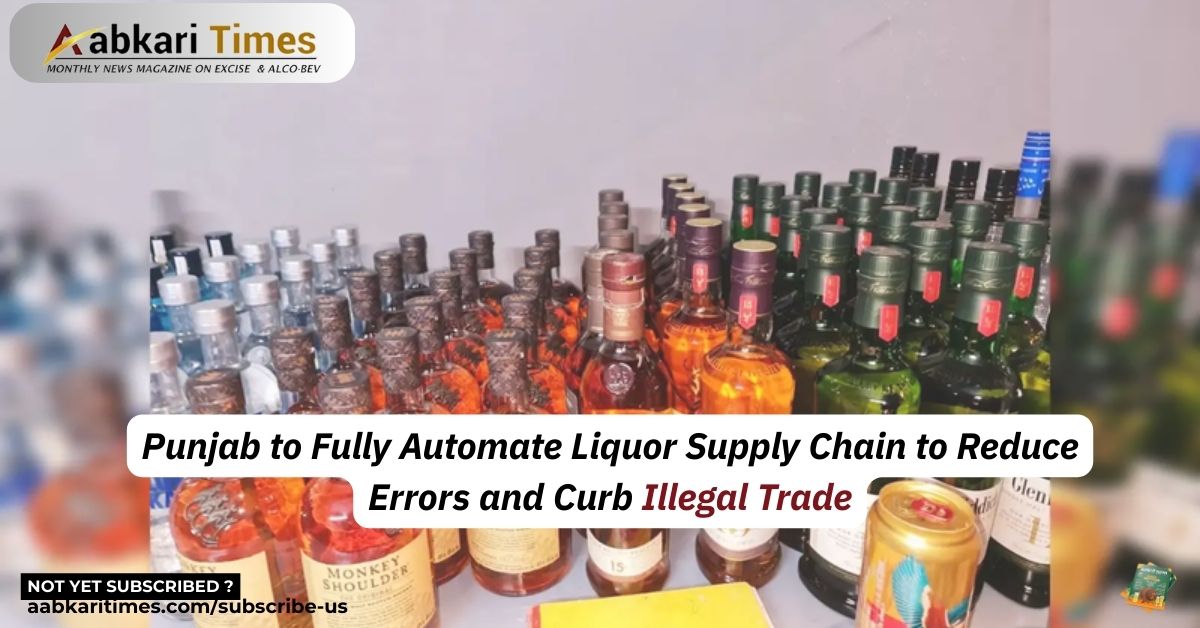
The Punjab government has decided to fully automate its QR code–based tracking system for liquor to reduce errors, prevent tax evasion, and crack down on the sale of fake and counterfeit alcohol.
At present, QR codes are manually pasted on liquor bottles and cartons, which often leads to mistakes. In many cases, codes are poorly attached or get damaged, making it difficult to track products. This manual process also slows down production at large manufacturing units.
Under the new system, every bottle or can of country liquor, Indian-made foreign liquor, beer, and imported liquor will carry a unique QR code, while each carton will have a corresponding barcode. Tracking will begin at distilleries and import points, move through bonded warehouses, and continue up to retail shops. This will give excise officials real-time visibility of liquor movement across the entire supply chain.
→ Delhi Excise Registers 725 FIRs and Arrests 730 in Five Months; Illegal Liquor Seizures More Than Double Ahead of Festive Season→ India’s Alcobev Industry Enters a Decade of Structural Growth as Premiumisation and Policy Reforms Accelerate
The main aim of the initiative is to strengthen monitoring, ensure excise duty is paid on every bottle, and stop the circulation of non-duty-paid and counterfeit liquor. QR code labels, along with holograms supplied by the India Security Press in Nashik, will be used to make duplication difficult.
Punjab Excise Commissioner Jitendra Jorwal said the automated system would bring greater transparency and accountability to the liquor trade. He added that real-time integration of all modules would help the department enforce excise rules more effectively.
The excise department has started the process of appointing a firm to develop a complete end-to-end software solution. The system will work in both offline and online modes, allowing manufacturers and importers to choose what suits their operations. It will include software development, integration with existing systems, and the supply of materials needed to print QR labels.
High-quality, tamper-proof QR labels will be printed using special ink and polypropylene-based material. Any attempt to remove or replace a label will leave a visible mark on the bottle, discouraging misuse and counterfeiting.
The software will generate secure, randomly created QR codes and barcodes that cannot be duplicated. Excise officers will be able to scan them to track a product’s movement in real time. The system will also generate alerts for duplicate scans, maintain permanent records, log damaged or destroyed labels with reasons, and integrate permits and passes issued through the e-Abkari portal.
In addition, the platform will link with boom barriers, GPS locks, and smart lock systems to track consignments during transit. It will record shortages, damage, and breakages at the destination and ensure full tracking of every shipment.
The system will be integrated with existing departmental platforms such as the NIC-managed e-Abkari portal and the Computerisation of Value Added Tax Information System (COVIS). Mobile applications for both Android and iOS will allow excise officers to carry out real-time inspections in the field.
At retail outlets, scanners will not be mandatory. However, consumers will be able to check the authenticity of liquor bottles using SMS, websites, or mobile apps.
To support better oversight and decision-making, the system will generate detailed dashboards and reports on inventory, production, dispatch, receipts, and label usage on a daily, monthly, and annual basis. A central helpdesk with multilingual staff will also be set up at the excise department’s Mohali headquarters to assist stakeholders throughout the day.
About the Author