
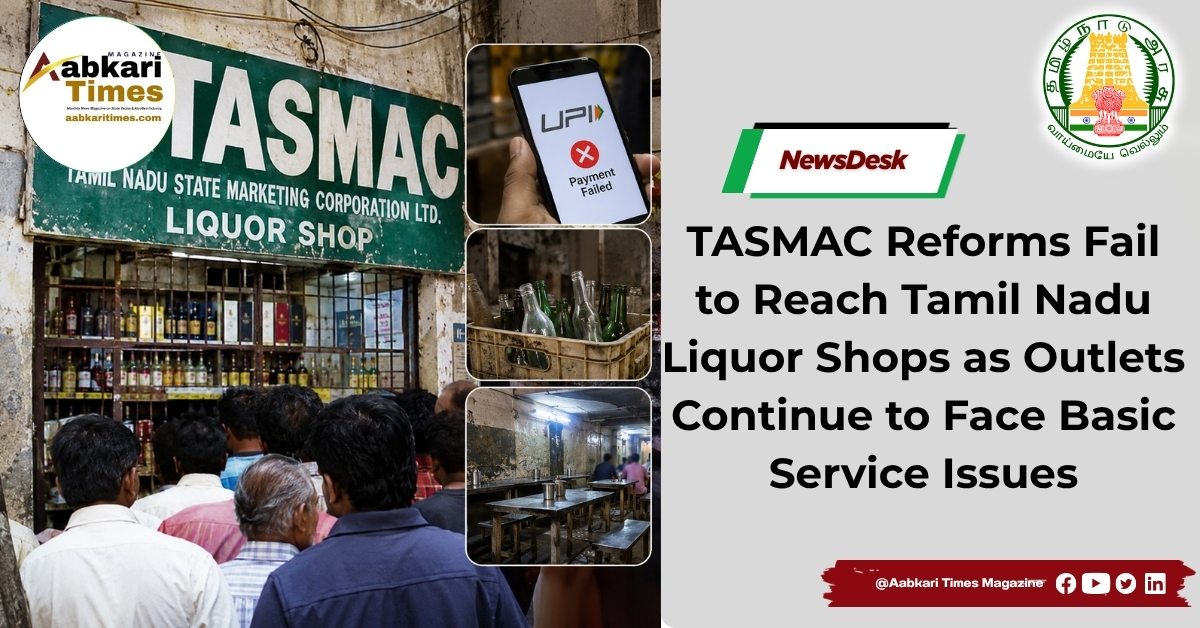
Tamil Nadu’s state-run liquor retail network continues to face serious operational and customer-service problems despite repeated reform announcements by the Tamil Nadu State Marketing Corporation (TASMAC). A report published on November 5, 2026, highlights how thousands of liquor outlets continue to operate with outdated facilities, inconsistent billing practices, limited product choices and inadequate grievance-redressal mechanisms.
Across the state, customers reportedly encounter missing price lists, unbilled purchases, alleged overcharging of ₹10–₹20 per bottle and staff behaviour that has drawn repeated complaints. Although barcode-based point-of-sale systems and Unified Payments Interface (UPI) facilities have reportedly been provided to many outlets, customers say digital transactions are frequently rejected with claims of server problems, forcing them to pay in cash.

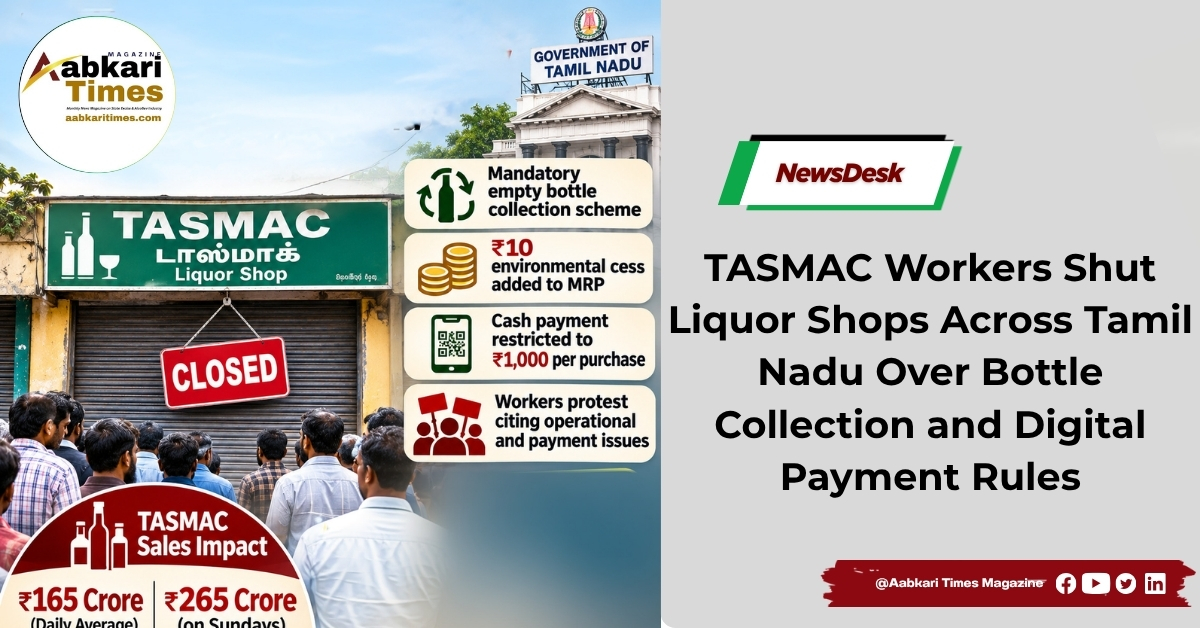
The latest setback concerns the proposed empty-bottle collection system and restrictions on cash transactions. Following a two-day closure by workers protesting the measures, the scheme reportedly failed to operate effectively when shops reopened. Customers in Chennai said outlets were not collecting empty bottles, while cash payments and alleged overcharging continued. The report also points to the failure of an online liquor reservation initiative within a week of its launch.
Tamil Nadu has approximately 4,051 TASMAC outlets, including 676 in the Chennai region. However, even many outlets within Greater Chennai Corporation limits reportedly remain without modern retail facilities. Conditions at attached bars have also come under criticism, with complaints about unhygienic premises, poor sanitation, unauthorised liquor sales and violations of operating hours.
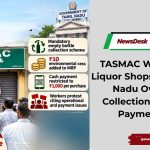 TASMAC Workers Shut Liquor Shops Across Tamil Nadu Over Bottle Collection and Digital Payment Rules
 Prayagraj Declares Dry Day on October 23 for MLC Election; All Liquor Shops to Remain Closed
Product availability is another concern. The report alleges that a limited group of domestic distilleries controls more than 90% of shelf space, restricting consumer access to imported spirits, grain-based whiskies and craft beers available in neighbouring markets.
Excise Minister K. Vignesh acknowledged that transforming a system affected by corruption and entrenched practices would take time. He said the government had introduced salary increases and medical benefits for employees and warned that new recruitment could follow if staff continued to obstruct improvements. The minister also indicated that fresh bar tenders and a pilot programme for imported liquor across 500 outlets were planned.
Despite these assurances, the effectiveness of TASMAC’s reforms will ultimately depend on their implementation at retail counters, transparent billing, better hygiene and improved consumer choice.
About the Author