
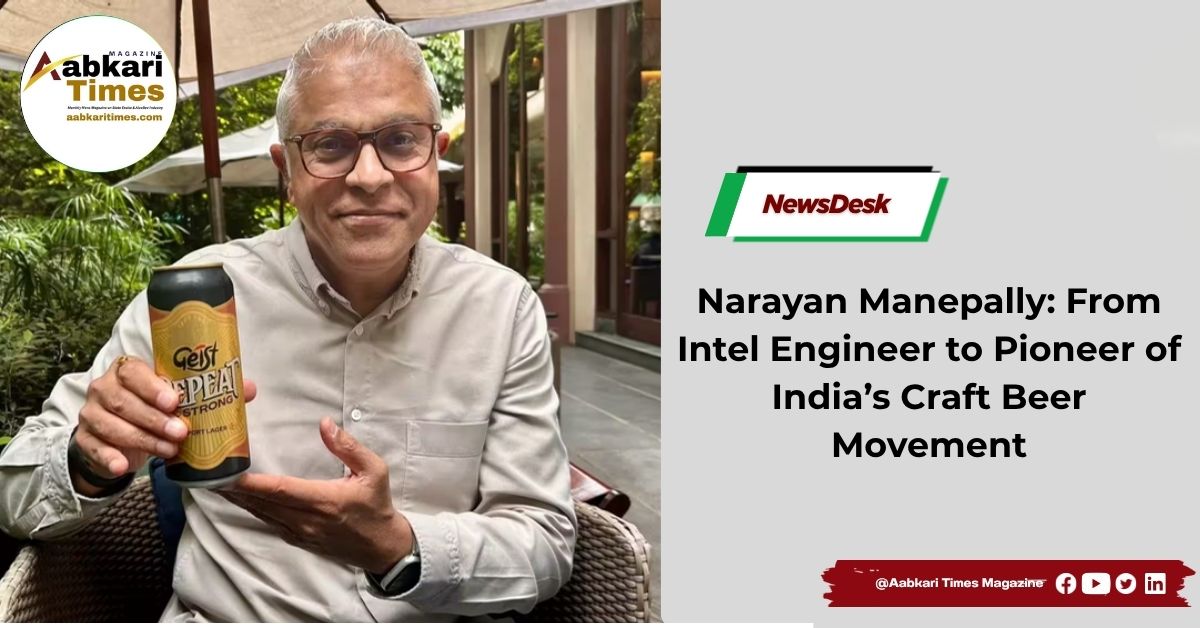
Narayan Manepally’s journey from working on early video-conferencing technology at Intel in the United States to building Geist Brewing Co. into one of India’s pioneering craft beer brands is a story of curiosity, experimentation and entrepreneurship. An engineer by training, Manepally spent his weekdays developing emerging multimedia technologies and his weekends brewing beer in his Oregon garage, eventually turning his passion for craft brewing into a business that helped shape India’s modern craft beer movement.
Manepally spent much of his childhood in Jamshedpur, where his father worked at Tata Engineering and Locomotive Company (TELCO), now Tata Motors. Growing up around families from different cultural backgrounds gave him early exposure to international influences. His family later faced severe financial difficulties after his father lost his job for refusing to facilitate a bribe. Manepally says those experiences taught him the importance of financial discipline, humility, reinvesting in business and maintaining integrity, values that continue to influence his entrepreneurial journey.
After completing his electrical engineering degree at BMS College of Engineering in Bengaluru, Manepally moved to the United States for a master’s degree at Virginia Tech. His interest in emerging multimedia technology led him to Intel’s Princeton Research Operation in New Jersey in 1991, where he worked on bringing audio and video capabilities to personal computers at a time when multimedia computing was still in its early stages.
 Amrut Distilleries’ Sales Growth to Remain Under Pressure Until 2030 Amid Limited Whisky Supply and Cheaper Scotch Imports
 Japan Cuts Beer Taxes, Making Regular Beer Cheaper from October 2026
At Intel, Manepally worked under Andy Grove and became involved in research into real-time video technology. While Intel’s multimedia work initially focused largely on recording, compressing and playing back video, Grove challenged the team to develop a system capable of real-time video communication. Working with colleague Peter Ahimovic, Manepally helped develop Intel’s first real-time video conferencing system in 1993. The research eventually evolved into Intel ProShare, one of the company’s early commercial video conferencing platforms and an important precursor to modern video calling.

His second major passion emerged after the project moved to Intel’s Oregon campus. Several of his colleagues brewed beer at home, introducing Manepally to the world of home brewing. He soon began experimenting with beer himself and built a small brewery in his garage. His first successful brew was a California golden ale, after which he spent years experimenting with different ingredients, recipes, fermentation techniques and beer styles.
Frequent trips back to India highlighted the difference between the beer culture he was experiencing in Oregon and the limited choice available to Indian consumers at the time. While the US had numerous small breweries producing diverse styles, India had very few craft beer options. This experience convinced Manepally that there was an opportunity to introduce a broader craft beer culture to the Indian market.
Manepally returned to India in 2003 with the ambition of becoming an entrepreneur in the beer industry. He registered Geist in 2006, at a time when Karnataka did not issue microbrewery licences. To keep the concept alive, he took recipes developed in Oregon to Belgium, where the beers were brewed, bottled and subsequently shipped to India. One of the early products was Geist Whistling Wheat, now known as Witty Wit, which helped introduce Belgian-style wheat beer to Indian consumers.
The growth of craft beer in Bengaluru was closely linked to regulatory changes and the efforts of early industry participants. Years of lobbying eventually contributed to Karnataka introducing microbrewery licences, creating the conditions for the growth of the state’s brewpub and craft beer sector. Manepally subsequently partnered in the launch of Bengaluru brewpubs including Byg Brewski and Brewski, which became popular destinations for beer enthusiasts.
As India’s craft beer market expanded, Geist moved beyond the brewpub model and developed into a standalone craft brewery with ambitions to build a wider market presence. The brand’s growth reflected the broader rise of craft beer in India, particularly among urban consumers seeking new beer styles, flavours and drinking experiences.
Manepally’s approach to business also extends beyond beer. During the pandemic, he explored sourdough baking and became interested in fermentation, hydration and gluten development. Coffee became another area of experimentation, with his interest extending to roasting, extraction and the influence of terroir. His constant focus on understanding how things work has remained a defining characteristic of his career, from engineering and brewing to food and beverage innovation.
Social impact and sustainability have also become important parts of Manepally’s vision for Geist. Together with his wife, he supports the education of children of their household staff by covering expenses including school fees, books, uniforms, hostel costs and summer camps. He hopes to eventually institutionalise the initiative through Geist as the company expands.
Geist has also adopted several sustainability measures across its operations. The company harvests rainwater, recharges groundwater, recycles a significant proportion of the water used in brewing and treats wastewater through natural filtration before reusing it. Kitchen waste is composted, while a three-and-a-half-acre farm supplies vegetables to the company’s restaurants, helping create a more circular operating model.
From developing early real-time video conferencing technology at Intel to experimenting with beer in an Oregon garage and eventually helping establish India’s craft beer culture, Narayan Manepally’s career has been driven by the same principle: curiosity. His journey with Geist reflects how experimentation, persistence and a willingness to challenge established norms can help create new categories and shape the evolution of India’s alcoholic beverages industry.
About the Author