
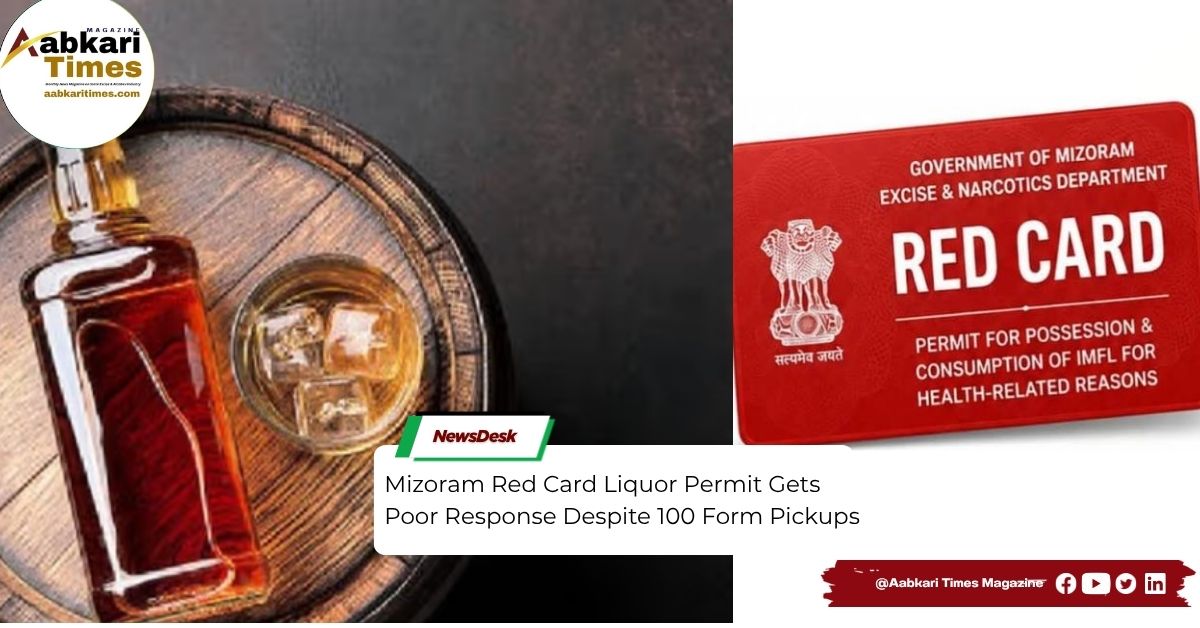
Aizawl: Mizoram Government’s revived Red Card liquor permit system for people requiring alcohol on medical grounds has received a very limited response, with only two applications submitted despite nearly 100 people collecting application forms. The development highlights the impact of the state’s stricter eligibility conditions under the revised excise proceedings.
The Excise and Narcotics Department has made the process significantly tougher than the earlier wine permit system. Applicants must now obtain a medical certificate from a registered doctor confirming that alcohol is necessary for treatment, and the recommendation must be countersigned by the District Medical Superintendent before the application is considered. Officials said the additional layers of medical scrutiny have discouraged many potential applicants from completing the process.
The Red Card permit is a special exemption under Mizoram’s prohibition law, allowing holders to legally purchase and consume liquor for certified medical reasons. The application form is priced at ₹50, while successful applicants are required to pay an annual permit fee of ₹5,000. Each permit remains valid for one year.
The Excise Department is also preparing to start a government-run liquor outlet at the office of the Excise Commissioner, from where Red Card holders will be authorised to purchase alcohol legally.
 John Distilleries Crosses ₹10,000 Crore Revenue in FY26 as Sazerac Becomes Majority Shareholder
 Mount Everest Breweries Files DRHP for ₹300 Crore IPO to Fund Expansion and Debt Repayment
However, many residents are reportedly reluctant to apply. A regular drinker in Aizawl, speaking anonymously, said that Indian-made foreign liquor (IMFL) is widely available through the black market. Although illicit liquor is sold at inflated prices, he said it is still considered easier than obtaining medical certificates and securing multiple official approvals.
The situation reflects the continuing contradiction of liquor prohibition in Mizoram. Despite the state officially banning alcohol for most of the past three decades, liquor continues to circulate through illegal channels. Prohibition was first imposed in 1997 following pressure from influential church organisations, which remain strong supporters of the policy. The Congress Government briefly lifted prohibition in 2015 and allowed licensed liquor shops to operate, but the decision faced strong opposition from church bodies and became a major political issue. After returning to power, the Mizo National Front (MNF) reinstated prohibition, and the current Zoram People’s Movement (ZPM) Government has continued the ban while permitting limited medical exemptions through the revived Red Card liquor permit system.
About the Author