

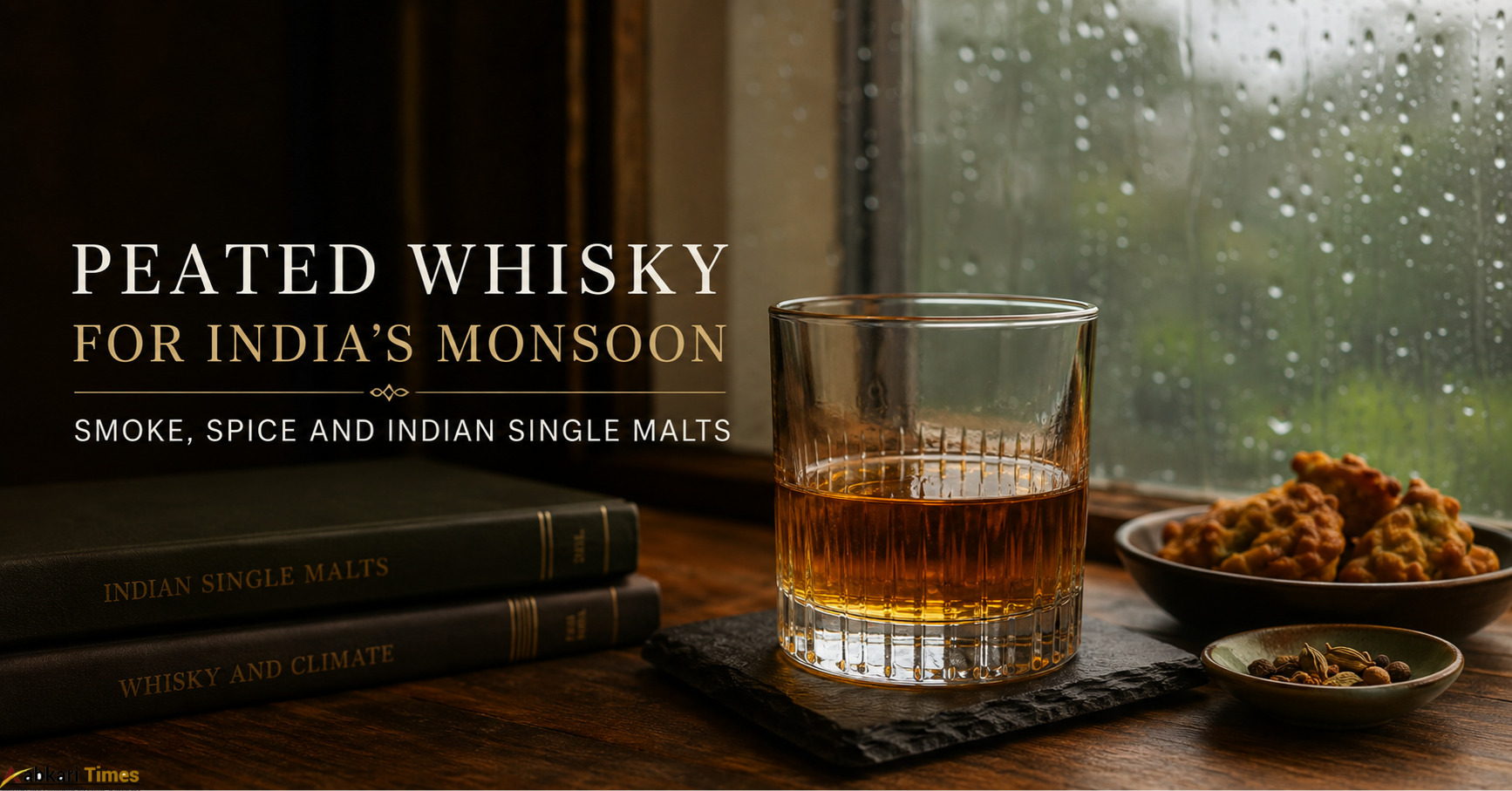
New Delhi: As monsoon showers bring cooler evenings across India, peated whisky is finding renewed appeal among single-malt drinkers looking for richer, warmer flavours. Known for its distinctive smoky character, peated whisky is increasingly being explored by consumers who want to move beyond conventional sweet, fruity or oak-led whisky profiles.
Once largely associated with Scottish distilleries, peated expressions are now an important part of India’s growing premium whisky landscape. Indian brands such as Amrut, Paul John and Indri are using peat-smoked malt to create whiskies that combine smoke with the tropical fruit, spice and rapid maturation associated with India’s climate.
What Is Peat and How Does It Shape Whisky?
Peat is a natural material created from partially decomposed plants in wetland and marshy environments over long periods. When it is dried and burned, it releases dense, aromatic smoke.
 Scotch Whisky Association Appeals Against England’s New Single Malt Whisky Rules
 Top 10 Premium Whisky Brands in India Above ₹5,000 for the Festive Season
In whisky-making, peat smoke is traditionally used during the malting stage. Germinated barley is dried over peat-fired heat, allowing smoky compounds to settle into the grain. These compounds continue through fermentation and distillation, eventually contributing flavours often described as earthy, smoky, medicinal, ashy, coastal or slightly salty.
The intensity of peat influence can vary widely. Some whiskies offer only a mild smoky note, while heavily peated expressions deliver bold flavours of campfire smoke, charcoal, sea spray and roasted grain.
Peat Is Not the Only Flavour Driver
While peat creates the signature smoky foundation, the final character of a whisky depends on several other factors. Fermentation can add fruity and cereal-like notes, while the design and operation of the still can influence texture and flavour retention.
Cask selection also plays a major role. Bourbon barrels, sherry casks and other oak vessels can introduce vanilla, dried fruit, spice, caramel and woody notes. In India, warmer temperatures accelerate maturation, often giving whiskies pronounced tropical fruit, honey and spice flavours in a shorter period.
This creates a distinctive balance in Indian peated single malts, where smoke often sits alongside mango, citrus, dates, cherry, honey and toasted oak rather than overwhelming the palate.
Indian Single Malts Bringing Peat to the Forefront
Indian distillers have steadily expanded their peated whisky portfolios as demand for premium and experimental single malts grows.
Amrut Distilleries, based in Bengaluru, was among the early Indian producers to gain global recognition for its single malts. Its peated releases combine smoky notes with fruit-driven Indian malt characteristics. Amrut Fusion is known for bringing together Indian malt and peated Scottish malt, while its cask-strength peated expressions are aimed at drinkers who prefer a more intense smoky profile.
Goa-based Paul John Whisky also uses Scottish peat in select expressions made with Indian barley. Its peated whiskies often bring together barbecue-style smoke, dried fruit, honey, warm spice and a light coastal touch.
Indri Whisky, produced by Piccadily Distilleries in Haryana, has added another dimension to the category with Indri Agneya. The slightly peated Indian single malt uses Scottish peat and is bottled without chill filtration or added colour, pairing restrained smoke with fruit and bourbon-cask influence.
Why Peated Whisky Suits the Indian Monsoon
The monsoon season naturally enhances the appeal of smoky whisky. Cooler temperatures, rain-soaked evenings and hearty seasonal food make peat-led flavours feel more inviting.
Peated whisky can work especially well with foods that have roasted, charred or spicy elements. Tandoori dishes, grilled kebabs, roasted mushrooms, smoky paneer preparations and crisp pakoras can complement the whisky’s earthy and warming profile.
A lightly peated whisky can be a good starting point for those new to smoke-forward spirits. It offers a softer balance of fruit, honey and oak with a gentle smoky finish. More experienced drinkers may prefer cask-strength or heavily peated options that place peat, ash and charred wood at the centre of the experience.
India’s Peated Whisky Market Is Expanding
Peated whisky remains a specialist category compared with mainstream blends and unpeated single malts, but its popularity reflects the changing tastes of India’s premium spirits consumers.
Drinkers are increasingly interested in flavour-led exploration, limited editions and whisky styles that offer more complexity. Indian distillers are responding by producing expressions that combine global whisky traditions with local climate, maturation and ingredient characteristics.
For many consumers, the attraction of peated whisky lies in contrast: smoke alongside sweetness, earthiness balanced by fruit, and warmth matched with the cool atmosphere of a monsoon evening.
About the Author