
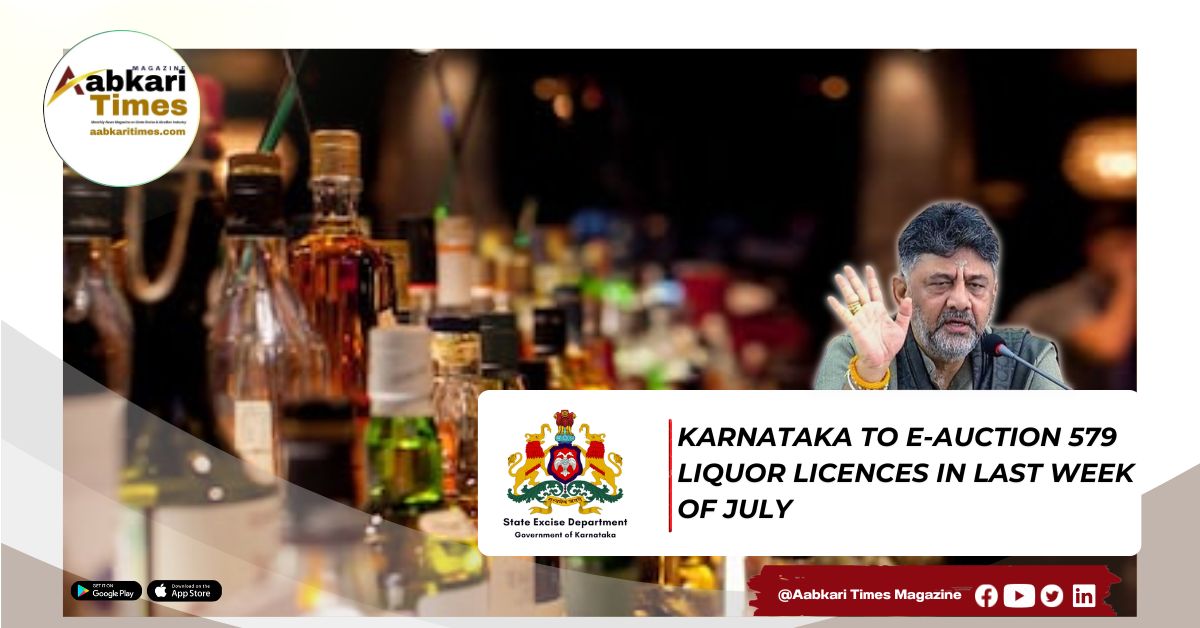
Bengaluru, July 2026: The Karnataka Excise Department will conduct e-auctions for 483 retail liquor shop licences and 96 bar and restaurant licences in the last week of July, as part of a broader exercise to monetise unused licences and improve revenue collection through a transparent electronic bidding process. The licences will be valid for five excise years, covering 2026-27 to 2030-31.
In Karnataka’s excise system, retail liquor shops where consumers buy bottled alcohol to take home operate under what is called a CL-2A licence. Bars and restaurants that serve alcohol for on-premise consumption operate under CL-9A licences. The 483 CL-2A and 96 CL-9A licences being auctioned are outlets that were previously unused, lapsed or discontinued and are now being reintroduced into the market through a competitive bidding process rather than discretionary allotment.
Bengaluru Urban has been assigned the highest base price at ₹1.5 crore per licence, reflecting the city’s larger consumer base and commercial value. Other cities including Belagavi, Ballari, Mysuru, Dharwad and Hubballi have been pegged at approximately ₹1.1 crore per licence. Bidders will need to participate through an electronic auction platform, with the process designed to eliminate manual intervention and bring greater accountability to licence allotment.
The move flows from Karnataka’s 2025-26 state budget, in which Chief Minister Siddaramaiah proposed e-auctioning unused liquor licences as part of efforts to mobilise additional resources for the state exchequer. An earlier round of Karnataka e-auctions covering 579 unused licences was expected to generate approximately ₹600 crore in additional revenue, and the July round builds on that established framework with a fresh pool of licences covering a longer five-year validity period.
 Monkey Shoulder Kicks Off 9th Ultimate Bartender Championship in India with New Delhi Round
 Tasmac to Invite Fresh Tenders for Bar Licences as Existing Permits Expire October 31
The new notification also introduces a reservation structure within the auction process for the first time, amending Rule 5 of the Karnataka Excise (Sale of Indian & Foreign Liquors) Rules, 1968. Under the revised framework, 5.2 per cent of licences each will be reserved for Scheduled Caste-A and Scheduled Caste-B categories, 4.5 per cent for Scheduled Caste-C, and 3 per cent for Scheduled Tribe applicants. Excise officials described this as extending the principle of reservation already applied in education and government jobs to self-employment opportunities in the liquor trade, giving marginalised communities a structured entry point into a sector that has historically been dominated by established business interests.
Officials noted that Andhra Pradesh and Telangana have adopted similar reservation models in liquor licence allotment. A comparable attempt in Karnataka in the past had faced legal challenge, though the Karnataka High Court in April 2026 upheld the constitutional validity of the state’s e-auction and reservation framework, clearing the path for the current round to proceed without legal hurdles.
Excise is the second-largest source of revenue for Karnataka after GST and VAT-related collections, with excise revenue between April 2025 and January 2026 already reaching ₹33,371 crore against full-year expectations of over ₹43,000 crore for FY2025-26. The July e-auction is expected to add meaningfully to the state’s revenue pipeline while simultaneously putting long-dormant licences back into active commercial use across the state.
With bidding scheduled for the last week of July and licences covering a five-year window through 2030-31, the Karnataka e-auction will be closely watched by industry stakeholders and by other state governments evaluating whether digitised, reservation-based licence allotment can serve as a replicable model for excise reform.
About the Author