
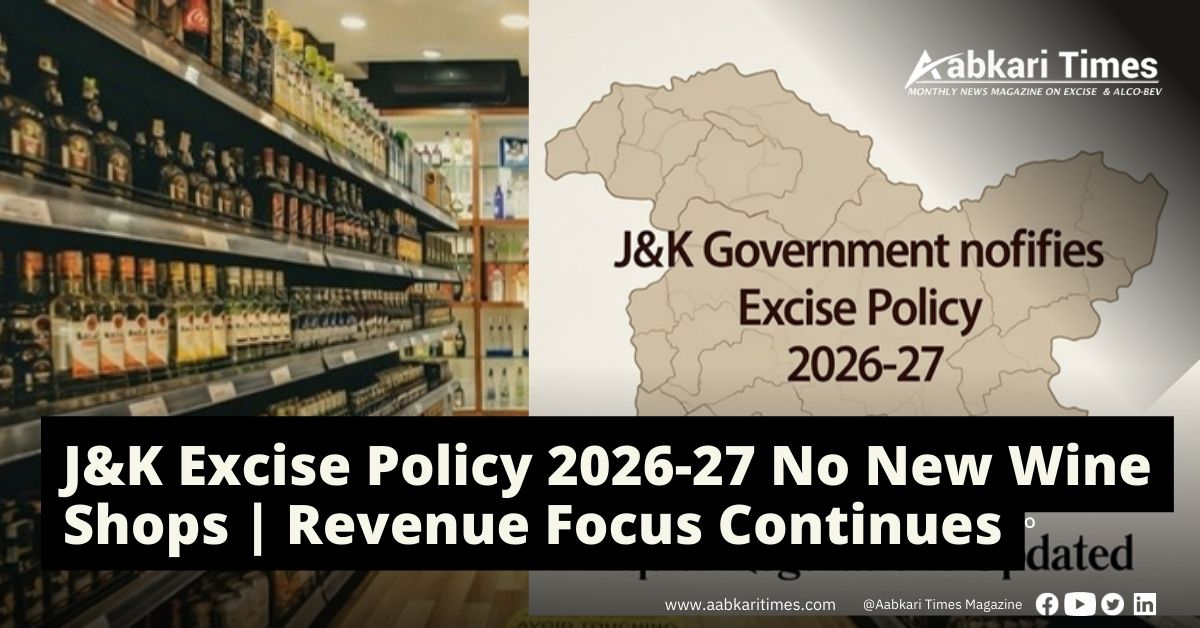
Jammu, February 11, 2026 — The Government of Jammu and Kashmir has officially notified the Excise Policy 2026-27 (S.O. 37), which will come into force from April 1, 2026, and remain valid till March 31, 2027. The policy, issued under the J&K Excise Act, Svt. 1958, aims to balance revenue generation, public health, tourism promotion, and curbing of illicit liquor trade.
Policy Objectives
The policy outlines eight key objectives:
- Promote social awareness about the harmful effects of alcohol and drug abuse.
- Encourage a shift from high-alcohol to low-alcohol content beverages.
- Rationalise taxes, duties, and levies to optimise government revenue.
- Check bootlegging and smuggling from neighbouring states/UTs.
- Provide consumers wider choice of brands and ensure a level playing field for stakeholders.
- Rationalise production and sale of JK Special Whisky and JK Country Liquor to curb illicit distillation.
- Tap the full potential of the existing liquor industry to promote ancillary units and generate employment.
- Achieve complete digitalisation of the entire liquor supply chain — from production to retail consumption.
Major Highlights & New Provisions
- Extended serving hours: Hotels and social occasions can serve liquor beyond regular timings on payment of ₹3,000 per hour per occasion.
- Rooftop/Terrace/Balcony service: Type-B licensees (hotels, bars) in Jammu and Srinagar Municipal Corporations can serve liquor on rooftops/terraces subject to strict safety conditions (minimum 6-ft high fencing, no visibility to surroundings, life-saving equipment near water bodies, etc.).
- Low-alcohol promotion: New licences for retail sale of Beer and RTD in JKTDC, tourism establishments, airports, and tourist areas to encourage low-alcohol consumption.
- Penalty for unauthorised serving: Commercial establishments (banquets, hotels, restaurants, clubs) serving liquor on social occasions without permission will face penalties starting at ₹30,000 (1st offence), escalating to ₹50,000 (2nd) and ₹1 lakh thereafter.
- Anti-monopoly measure: Manufacturing units (distilleries, breweries, bottling plants, wineries) are now ineligible to hold Type A, B, or C licences.
- RTD Production: Permission granted to D-2 and JKEL-6 units to manufacture Ready-to-Drink beverages on payment of ₹20,000 annual fee.
- Export push: Concessional bottling fee of ₹2 per bottle/BL for exports; processing and maturation of special spirits encouraged.
Retail Vends (JKEL-2) – No New Shops
Consistent with the government’s stand in the Legislative Assembly, no new JKEL-2 liquor shops will be issued in 2026-27. Existing vends will be allotted through e-auction on https://jkexcisedept.procure247.com.
Key changes:
- Only one vend per successful bidder to prevent cartelisation.
- Strict eligibility: J&K domicile, minimum 21 years, clean criminal record, immovable property worth up to 100% of reserve price (or 50% + Bank Guarantee).
- Participation fee: ₹75,000 (non-refundable).
- Earnest Money Deposit: ₹10 lakh per vend.
- Mandatory digital payments (UPI, cards), CCTV cameras (15-day backup), and anti-drink-drive signboards.
- Green initiative: Licensees must place dustbins inside/outside vends.
Revenue & Duties (Key Rates)
- Excise Duty on IMFL ranges from ₹261–300 per LPL depending on segment.
- Additional Assessment Duty (AAD): 40% of MRP for most liquor (10% for BIO, RTD, Wine & Cider).
- Import Duty on IMFL: ₹49 per 750 ml bottle.
- Ban on cheap IMFL imports: Brands with MRP ≤ ₹600 per 750 ml bottle cannot be imported to protect local industry.
- All locally manufactured IMFL (except BIO) must be ENA-based.
Social Responsibility & Other Measures
- Licensees (Type A, B, C & F) must contribute monthly to the Social Responsibility Corpus Fund (₹1,500–₹3,500) for awareness campaigns, de-addiction, and youth sports.
- Rewards for informants on illicit distillation, smuggling, and drug-related activities.
- Full rollout of e-Abgari platform for online permits, payments, and Track & Trace system.
- Flow meters made mandatory in bottling plants.
The policy continues the government’s focus on responsible regulation while boosting revenue (which crossed ₹2,152 crore in the last two years from auctions) and supporting tourism. Chief Minister Omar Abdullah has repeatedly ruled out prohibition, citing risks of black marketing and loss of revenue.
 Odisha Collects ₹24,455 Crore in Excise Duty Over Five Years, CAG Report Reveals
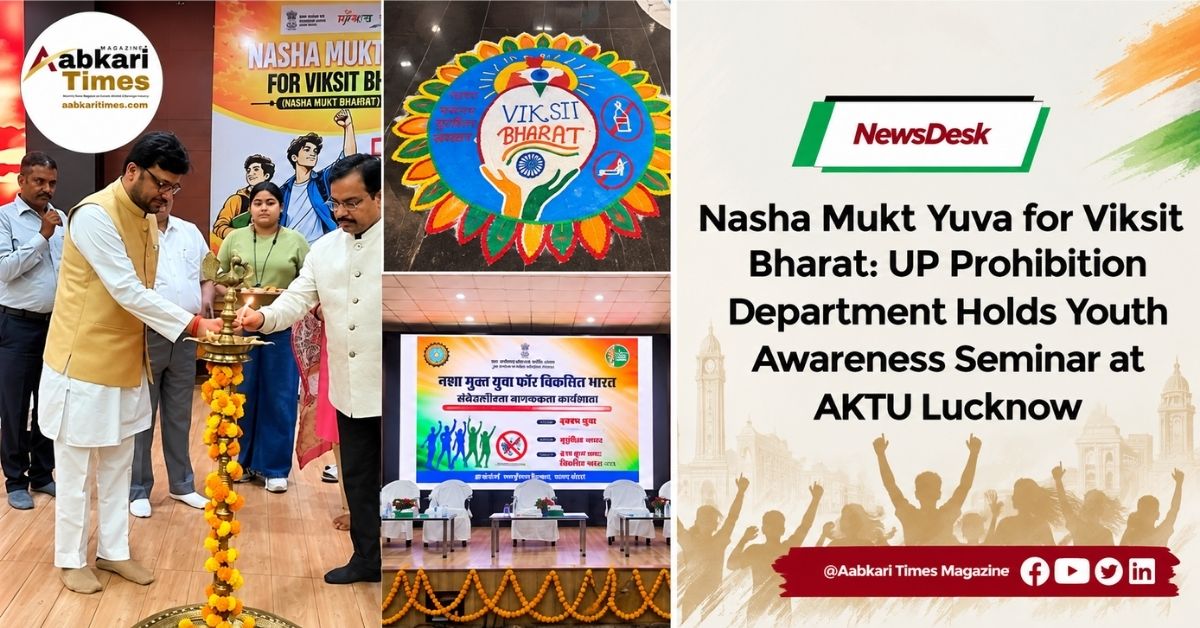
 Nasha Mukt Yuva for Viksit Bharat UP Prohibition Department Holds Youth Awareness Seminar at AKTU Lucknow
This policy update is expected to guide stakeholders in the excise and alco-bev industry for the coming year, ensuring compliance, revenue stability, and responsible regulation.
[3d-flip-book id=”108235″ ][/3d-flip-book]
About the Author