Monday, March 23, 2026
Home Blog Page 579

Supply chain of spirits was stabilised by Q2, delivering strong performance: Pernod Ricard India

0

[ad_1]

One of the biggest liquor companies in the world, Pernod Ricard, has made major inroads into the Indian market with the multinational ahead with 45 per cent of the market share in value terms. In an interview with BusinessLine, Rajesh Mishra, the Chief Financial Officer, Pernod Ricard’s Indian operations, speaks about the company’s plans for the country post-Covid.

India has always been a difficult market for liquor companies due to myriad regulations. Has Pernod Ricard achieved the milestones it set out for itself since its entry into India?

The Indian liquor market has its own peculiarity with State-specific regulations. Not only for us but for anyone with pan-India business ambition, it is like managing the business in 29 countries. We have not only reset the quality benchmark of Indian product in the Alco-Bev industry with our offerings but also reset the way alco-bev business was done in India so far, with our business model and ways of doing business becoming a reference for Industry to follow.

Today,Pernod Ricard India has the most comprehensive brand portfolio of International and Indian brands for every convivial consumption occasion and for every consumer segment. About 25 years ago, it was too audacious to dream all these by a new entrant in the market.

Pernod Ricard has always been measured for its success in value terms than in volume terms in India. But without the necessary volumes to back its growth, will it become difficult for it to get to the leadership position in the Indian market?

We operate capture the lion’s share of volume of every segment which generates value and stay away from those that destroys value. Indian consumers are always ready to premiumise. In the past decade, premium segment brands have witnessed much higher growth vs mass-market brands and this trend will catch much stronger momentum in the current decade. We are best positioned to capitalise on this wave with the most exhaustive portfolio of premium brands across categories.

Is the company looking at acquisitions to expand its share in the market since valuations currently might be less than the pre-pandemic times?

Our intent has always been to cater to every consumption occasion with our expansive portfolio, driving premiumisation. Blended brandy category looks promising from a distance but it is value-generation potential to be evaluated. We see an interesting trend emerging with a resurgence of Gin and growing conversation around this versatile white spirit.

Also read: Pernod Ricard hopes to get the fizz back soon in India

We introduced a new brand in the ultra-prestige gin category early this year, which is showing very strong promise. To address our consumer needs in their different moment of consumptions, Pernod Ricard is continuously looking for opportunities and always been open for both, organic/inorganic route to expand its product portfolio.

What are the areas that the company is looking forward to strengthening its operations in India?

The Covid-19 crisis will remain a story with an unclear ending for quite some time. The health and safety of our employees, associates and ensuring the delivery of safe products will remain our top focus area. Reconfiguring and adapting quickly to cater to the needs created by this crisis and potential impact on the change in consumer behaviours is going to be a core focus area.

We would continue to focus on growing our portfolio, widening our leadership gap in our operating segments, organisational capability buildings around supply chain/Data & Analytics/Digitising internal and external journey, plant automation, consumer and business partner relationship architecture.

How badly were Pernod Ricard’s operations hit in India following the outbreak of the pandemic?

Like every other industry, we were also impacted severely in the initial few months of Covid-imposed lockdown. During April-May, 2020 there were no sales. However, in the later months, with partial unlocking, markets started to pick up as we embraced learning to live with this crisis while ensuring health and safety of all our employees, associates and will continue till mass scale cure is available.

Also read: Spirit-maker Pernod Ricard eyes ‘low double-digit growth’

We reconfigured and reset our business operations quickly (from consumer demand to product availability to business enabling operations) towards contactless commerce, with nerve centre management model to set right trigger points to act with speed, agility & adaptiveness. All this enabled us to come back to very close to pre-Covid level of business performance for July-December, 2020.

During an earnings’ call recently, Pernod Ricard’s top executives said while the company’s international brands, Jameson Irish Whiskey and Ballantine’s Scotch Whiskey were able to weather the impact of the pandemic, its local brand, Seagram’s Indian whiskey saw a decline in the previous quarter. Does this mean that there is lesser traction for local, domestic brands in the portfolio and does it qualify for a trend going forward for international liquor companies like Pernod Ricard?

While the domestic brands’ volume declined during first quarters post opening up of lockdown and in the second quarter (Oct-Dec) it delivered a very strong performance, taking delivery almost at the pre-Covid level. First-quarter soft performance of local brands was impacted by supply disruption, as manufacturing plants were not operational at full capacity.

In the second quarter, as supply chain normalised with manufacturing plant reaching to desired capacity level within health and safety norm framework, local brands delivered a very strong performance. The international brands’ volume remained buoyant, there were some signs of travel retail demand shifting to domestic channels owing to the Covid-19 led travel ban.

During 2019-20, Pernod Ricard posted revenues of around ₹21,000 crore selling 55 million cases per year. What has been the year-on-year growth for the company since its entry into India? When does it plan to achieve similar growth or exceed such growth?

In India per year about 25 million consumers enter the legal drinking age, equivalent to one Australia. Average per capita consumption in India is significantly lower than the rest of the world, underlining the opportunity that this country offers. Pernod Ricard India topline has been growing at double-digit consistently with very healthy bottom-line growth, very strong cash conversion and profitability ratio, with a sustained level of investment as per our consistent strategy.

[ad_2]

The above news was originally posted on www.thehindubusinessline.com
Supply chain of spirits was stabilised by Q2, delivering strong performance: Pernod Ricard India

0

[ad_1]

One of the biggest liquor companies in the world, Pernod Ricard, has made major inroads into the Indian market with the multinational ahead with 45 per cent of the market share in value terms. In an interview with BusinessLine, Rajesh Mishra, the Chief Financial Officer, Pernod Ricard’s Indian operations, speaks about the company’s plans for the country post-Covid.

India has always been a difficult market for liquor companies due to myriad regulations. Has Pernod Ricard achieved the milestones it set out for itself since its entry into India?

The Indian liquor market has its own peculiarity with State-specific regulations. Not only for us but for anyone with pan-India business ambition, it is like managing the business in 29 countries. We have not only reset the quality benchmark of Indian product in the Alco-Bev industry with our offerings but also reset the way alco-bev business was done in India so far, with our business model and ways of doing business becoming a reference for Industry to follow.

Today,Pernod Ricard India has the most comprehensive brand portfolio of International and Indian brands for every convivial consumption occasion and for every consumer segment. About 25 years ago, it was too audacious to dream all these by a new entrant in the market.

Pernod Ricard has always been measured for its success in value terms than in volume terms in India. But without the necessary volumes to back its growth, will it become difficult for it to get to the leadership position in the Indian market?

We operate capture the lion’s share of volume of every segment which generates value and stay away from those that destroys value. Indian consumers are always ready to premiumise. In the past decade, premium segment brands have witnessed much higher growth vs mass-market brands and this trend will catch much stronger momentum in the current decade. We are best positioned to capitalise on this wave with the most exhaustive portfolio of premium brands across categories.

Is the company looking at acquisitions to expand its share in the market since valuations currently might be less than the pre-pandemic times?

Our intent has always been to cater to every consumption occasion with our expansive portfolio, driving premiumisation. Blended brandy category looks promising from a distance but it is value-generation potential to be evaluated. We see an interesting trend emerging with a resurgence of Gin and growing conversation around this versatile white spirit.

Also read: Pernod Ricard hopes to get the fizz back soon in India

We introduced a new brand in the ultra-prestige gin category early this year, which is showing very strong promise. To address our consumer needs in their different moment of consumptions, Pernod Ricard is continuously looking for opportunities and always been open for both, organic/inorganic route to expand its product portfolio.

What are the areas that the company is looking forward to strengthening its operations in India?

The Covid-19 crisis will remain a story with an unclear ending for quite some time. The health and safety of our employees, associates and ensuring the delivery of safe products will remain our top focus area. Reconfiguring and adapting quickly to cater to the needs created by this crisis and potential impact on the change in consumer behaviours is going to be a core focus area.

We would continue to focus on growing our portfolio, widening our leadership gap in our operating segments, organisational capability buildings around supply chain/Data & Analytics/Digitising internal and external journey, plant automation, consumer and business partner relationship architecture.

How badly were Pernod Ricard’s operations hit in India following the outbreak of the pandemic?

Like every other industry, we were also impacted severely in the initial few months of Covid-imposed lockdown. During April-May, 2020 there were no sales. However, in the later months, with partial unlocking, markets started to pick up as we embraced learning to live with this crisis while ensuring health and safety of all our employees, associates and will continue till mass scale cure is available.

Also read: Spirit-maker Pernod Ricard eyes ‘low double-digit growth’

We reconfigured and reset our business operations quickly (from consumer demand to product availability to business enabling operations) towards contactless commerce, with nerve centre management model to set right trigger points to act with speed, agility & adaptiveness. All this enabled us to come back to very close to pre-Covid level of business performance for July-December, 2020.

During an earnings’ call recently, Pernod Ricard’s top executives said while the company’s international brands, Jameson Irish Whiskey and Ballantine’s Scotch Whiskey were able to weather the impact of the pandemic, its local brand, Seagram’s Indian whiskey saw a decline in the previous quarter. Does this mean that there is lesser traction for local, domestic brands in the portfolio and does it qualify for a trend going forward for international liquor companies like Pernod Ricard?

While the domestic brands’ volume declined during first quarters post opening up of lockdown and in the second quarter (Oct-Dec) it delivered a very strong performance, taking delivery almost at the pre-Covid level. First-quarter soft performance of local brands was impacted by supply disruption, as manufacturing plants were not operational at full capacity.

In the second quarter, as supply chain normalised with manufacturing plant reaching to desired capacity level within health and safety norm framework, local brands delivered a very strong performance. The international brands’ volume remained buoyant, there were some signs of travel retail demand shifting to domestic channels owing to the Covid-19 led travel ban.

During 2019-20, Pernod Ricard posted revenues of around ₹21,000 crore selling 55 million cases per year. What has been the year-on-year growth for the company since its entry into India? When does it plan to achieve similar growth or exceed such growth?

In India per year about 25 million consumers enter the legal drinking age, equivalent to one Australia. Average per capita consumption in India is significantly lower than the rest of the world, underlining the opportunity that this country offers. Pernod Ricard India topline has been growing at double-digit consistently with very healthy bottom-line growth, very strong cash conversion and profitability ratio, with a sustained level of investment as per our consistent strategy.

[ad_2]

The above news was originally posted on www.thehindubusinessline.com
German wine brands Becksteiner and J. Oppmann to enter India by homegrown liquor startup Ciro

0

[ad_1]

German wine brands Becksteiner and J. Oppmann to enter India by homegrown liquor startup CiroNow you can raise a toast to a glass of premium German sekt or sparkling wine poured from a 14-carat gold plated bottle by brand J. Oppmann that once made champagne for the king of Bavaria.

Premium German wine brands J. Oppmann and Becksteiner are entering India in February through Chennai-based liquor startup Ciro which is importing the brands to cash in on the pandemic times when consumers are grounded by travel curbs, leaving tipplers craving for offbeat international alcobev brands. Consumers typically shop for liquor, perfumes, cigarettes, chocolates, beauty and watches from duty free outlets at airports with price tags nearly 40% lower due to tax exemption.

“Indians are not travelling overseas as much. Dining out is limited. People have thus saved a lot of money during lockdown. They are investing in best of imported alcoholic beverages in the domestic market for home consumption. The pandemic worked in our favour,” said Roshni Hemdev, managing director – business, Ciro.

The homegrown liquor firm – owned by mother-daughter duo Kiran and Roshni Hemdev and German partner Christian Garrelt Saathoff – will import and retail the wine brands in Tamil Nadu and Karnataka before a national roll out. The portfolio includes red, white and sparkling wines.

In October, Ciro made its debut in the country’s liquor ecosystem with the launch of Brunonia, a heritage wheat beer brand by Hofbrauhaus Wolters, a 390-year-old brewery in north Germany. The company is now exploring key markets of Goa and Andhra Pradesh as the next pitstop for the beer brand.

A rose secco and a boutique champagne are part of the portfolio expansion plan this summer. A premium gin and vodka from Germany may be added later this year.

Overall, liquor companies clocked full recovery and sales growth exceeding pre-Covid levels in the festive quarter ended December, bouncing back from the severe sales cramp after the lockdown was clamped across most parts of the country since March.

“Demand for United Spirits (USL) has returned to pre-Covid-19 levels. It is also benefiting from some tailwinds – duty-free shifting to duty-paid and shift from beer,” Emkay Securities had said after interacting with eight liquor giants including USL and Pernod Ricard in an alcobev conference in December.

According to liquor apex body The Confederation of Indian Alcoholic Beverage Companies (CIABC), India is the third largest spirits market in the world by volume. With annual revenues of Rs 4.5 lakh crore, it is also one of the largest industries within Indian economy. The industry also contributes approximately Rs 2.4-lakh crore in taxes to the governments, thus making it one of the highest tax contributors. It accounts for 20-40% of tax revenues of most state governments.


[ad_2]

The above news was originally posted on retail.economictimes.indiatimes.com

German wine brands Becksteiner and J. Oppmann to enter India by homegrown liquor startup Ciro

0

[ad_1]

German wine brands Becksteiner and J. Oppmann to enter India by homegrown liquor startup CiroNow you can raise a toast to a glass of premium German sekt or sparkling wine poured from a 14-carat gold plated bottle by brand J. Oppmann that once made champagne for the king of Bavaria.

Premium German wine brands J. Oppmann and Becksteiner are entering India in February through Chennai-based liquor startup Ciro which is importing the brands to cash in on the pandemic times when consumers are grounded by travel curbs, leaving tipplers craving for offbeat international alcobev brands. Consumers typically shop for liquor, perfumes, cigarettes, chocolates, beauty and watches from duty free outlets at airports with price tags nearly 40% lower due to tax exemption.

“Indians are not travelling overseas as much. Dining out is limited. People have thus saved a lot of money during lockdown. They are investing in best of imported alcoholic beverages in the domestic market for home consumption. The pandemic worked in our favour,” said Roshni Hemdev, managing director – business, Ciro.

The homegrown liquor firm – owned by mother-daughter duo Kiran and Roshni Hemdev and German partner Christian Garrelt Saathoff – will import and retail the wine brands in Tamil Nadu and Karnataka before a national roll out. The portfolio includes red, white and sparkling wines.

In October, Ciro made its debut in the country’s liquor ecosystem with the launch of Brunonia, a heritage wheat beer brand by Hofbrauhaus Wolters, a 390-year-old brewery in north Germany. The company is now exploring key markets of Goa and Andhra Pradesh as the next pitstop for the beer brand.

A rose secco and a boutique champagne are part of the portfolio expansion plan this summer. A premium gin and vodka from Germany may be added later this year.

Overall, liquor companies clocked full recovery and sales growth exceeding pre-Covid levels in the festive quarter ended December, bouncing back from the severe sales cramp after the lockdown was clamped across most parts of the country since March.

“Demand for United Spirits (USL) has returned to pre-Covid-19 levels. It is also benefiting from some tailwinds – duty-free shifting to duty-paid and shift from beer,” Emkay Securities had said after interacting with eight liquor giants including USL and Pernod Ricard in an alcobev conference in December.

According to liquor apex body The Confederation of Indian Alcoholic Beverage Companies (CIABC), India is the third largest spirits market in the world by volume. With annual revenues of Rs 4.5 lakh crore, it is also one of the largest industries within Indian economy. The industry also contributes approximately Rs 2.4-lakh crore in taxes to the governments, thus making it one of the highest tax contributors. It accounts for 20-40% of tax revenues of most state governments.


[ad_2]

The above news was originally posted on retail.economictimes.indiatimes.com

In Conversation With: Ganesh Iyer, India’s First Water Sommelier

0

[ad_1]

How did you foray into the mineral water industry?

Back in the 90’s I was fresh out of college. I started with a short stint in an organisation which had nothing to do with beverages and soon found myself attracted to the workings of the hotel and restaurant industry and their offerings. I got a huge break to work for a brand like Evian through their channel partner to cater to the HORECA segment. I learnt the ropes of handling an elementary beverage like water but in the luxury segment. Then I went on to launch various beverage brands like Himalayan, Ferrarelle, Perrier, Qua  and in between had two successful stints with alcobev companies like Diageo and Moet Hennessy and finally with VEEN for the last eight years.

Ganesh Iyer, India's first Water Sommelier

 What does it mean to be a certified water sommelier? 

Fabulous, I guess. Somehow after having spent close to over two decades in the field of alcobev and non alcobev and having had the distinction of being part of teams that launched six different brands of natural mineral waters and sparkling waters in India from the 90s with VEEN being the seventh water brand, I believe that it was the right time to validate these learnings through DOEMENS AcademyGräfelfing Munich which is rated as one of the best academies to get yourself accredited as a water sommelier.

What is the training process like?

Training includes classroom sessions and factory visits in a span of a week to ten days. Classroom sessions essentially consist of understanding water, its origin, the scope, and its relevance, not just for the culinary environment but also at large. It also includes tasting and sensory sessions to dissect each mineral in the water, their range and their interpretation based on the various flavours it has to offer and the mouthfeel that it lends and finally the after taste. Factory visits are more led from a historical or a legacy view point of that particular brand of water, and the various steps that the brand has taken over the years in terms of the factory design, the packaging, the new offerings, etc.

VEEN CLASSIC - Sparkling Natural Mineral Water

How do you detect, recognise and differentiate between types of water? How would you describe the nuances of water?

Water has different characteristics to offer. In terms of classification, you have packaged drinking water and natural mineral water. Packaged drinking water has not much to offer. It does not have a story that’s worth talking about except the fact that its purified water (with no natural minerals), and would just quench your thirst. However, with regard to natural mineral water, there’s a whole new world that exists because you can detect, recognise, and differentiate traits like vintage, hardness, pH level, virginality, and TDS which makes the experience very unique and these are at different levels for each of the mineral water brands and that is why each of the Fine Waters have something interesting to offer. There are waters which have high levels of calcium like in the case of VEEN from Bhutan. ROI from Slovenia has a TDS of almost 7,500 mg per bottle and has the highest amount of magnesium ever found in mineral water. Likewise the TDS of the VEEN water from Finland is anything between 15-17 mg per bottle which makes it one of the smoothest waters on earth.

What are the challenges that you had to face as a water sommelier?

Internationally, water sommeliers today—with the presence of Fine Waters—are at par with wine sommeliers, so much so that there are water menus created by these sommeliers which offer Fine Waters with food and spirits. In the Indian context, the hotel and restaurant fraternity is slowly opening up to the relevance and importance of water sommeliers, as a specialist who could help and drive not just revenue but also a complete dining experience of water and food. There aren’t any specific challenges on ground, but yes, there’s still a mental block about water amongst a few hoteliers and restaurateurs with their banal and skewed mindset.

Can you tell us a little bit about the opportunities that might open up for water sommeliers in the future?

Opportunities are galore for water sommeliers not just because of the fact that it sounds fancy, but to consider that 80% of all beverages consist of water and thereby water and water sommeliers deserve far more respect and due under the sun. One can become an independent water sommelier and offer consultation services with regard to the scope of natural mineral water and their subsequent impact on wines and spirits. Just like a premium hotel or restaurant would have their inhouse wine sommelier, they could have a water sommelier who would offer them these services to enhance their overall dining experience not just with wines and spirits pairing but also pairings with water.


Can you share a few tips on food and water pairings?

Yes. In the case of a barbequed fish, the ideal accompaniment can be a standard natural mineral water which has a good amount of TDS or also sparkling water which has heavy bubbles. The idea behind this pairing is that the mouthfeel of the delicacy should not overpower the water. Sushi goes perfectly well with sparkling water that is low on carbonation and has smaller bubbles. If one would like to enjoy a caviar it is best to have it with sparkling water that has absolutely no sodium in it. And if you prefer cheese then the ideal accompaniment of natural mineral water would be the one that has high levels of bicarbonate.

[ad_2]

The above news was originally posted on www.outlookindia.com

In Conversation With: Ganesh Iyer, India’s First Water Sommelier

0

[ad_1]

How did you foray into the mineral water industry?

Back in the 90’s I was fresh out of college. I started with a short stint in an organisation which had nothing to do with beverages and soon found myself attracted to the workings of the hotel and restaurant industry and their offerings. I got a huge break to work for a brand like Evian through their channel partner to cater to the HORECA segment. I learnt the ropes of handling an elementary beverage like water but in the luxury segment. Then I went on to launch various beverage brands like Himalayan, Ferrarelle, Perrier, Qua  and in between had two successful stints with alcobev companies like Diageo and Moet Hennessy and finally with VEEN for the last eight years.

Ganesh Iyer, India's first Water Sommelier

 What does it mean to be a certified water sommelier? 

Fabulous, I guess. Somehow after having spent close to over two decades in the field of alcobev and non alcobev and having had the distinction of being part of teams that launched six different brands of natural mineral waters and sparkling waters in India from the 90s with VEEN being the seventh water brand, I believe that it was the right time to validate these learnings through DOEMENS AcademyGräfelfing Munich which is rated as one of the best academies to get yourself accredited as a water sommelier.

What is the training process like?

Training includes classroom sessions and factory visits in a span of a week to ten days. Classroom sessions essentially consist of understanding water, its origin, the scope, and its relevance, not just for the culinary environment but also at large. It also includes tasting and sensory sessions to dissect each mineral in the water, their range and their interpretation based on the various flavours it has to offer and the mouthfeel that it lends and finally the after taste. Factory visits are more led from a historical or a legacy view point of that particular brand of water, and the various steps that the brand has taken over the years in terms of the factory design, the packaging, the new offerings, etc.

VEEN CLASSIC - Sparkling Natural Mineral Water

How do you detect, recognise and differentiate between types of water? How would you describe the nuances of water?

Water has different characteristics to offer. In terms of classification, you have packaged drinking water and natural mineral water. Packaged drinking water has not much to offer. It does not have a story that’s worth talking about except the fact that its purified water (with no natural minerals), and would just quench your thirst. However, with regard to natural mineral water, there’s a whole new world that exists because you can detect, recognise, and differentiate traits like vintage, hardness, pH level, virginality, and TDS which makes the experience very unique and these are at different levels for each of the mineral water brands and that is why each of the Fine Waters have something interesting to offer. There are waters which have high levels of calcium like in the case of VEEN from Bhutan. ROI from Slovenia has a TDS of almost 7,500 mg per bottle and has the highest amount of magnesium ever found in mineral water. Likewise the TDS of the VEEN water from Finland is anything between 15-17 mg per bottle which makes it one of the smoothest waters on earth.

What are the challenges that you had to face as a water sommelier?

Internationally, water sommeliers today—with the presence of Fine Waters—are at par with wine sommeliers, so much so that there are water menus created by these sommeliers which offer Fine Waters with food and spirits. In the Indian context, the hotel and restaurant fraternity is slowly opening up to the relevance and importance of water sommeliers, as a specialist who could help and drive not just revenue but also a complete dining experience of water and food. There aren’t any specific challenges on ground, but yes, there’s still a mental block about water amongst a few hoteliers and restaurateurs with their banal and skewed mindset.

Can you tell us a little bit about the opportunities that might open up for water sommeliers in the future?

Opportunities are galore for water sommeliers not just because of the fact that it sounds fancy, but to consider that 80% of all beverages consist of water and thereby water and water sommeliers deserve far more respect and due under the sun. One can become an independent water sommelier and offer consultation services with regard to the scope of natural mineral water and their subsequent impact on wines and spirits. Just like a premium hotel or restaurant would have their inhouse wine sommelier, they could have a water sommelier who would offer them these services to enhance their overall dining experience not just with wines and spirits pairing but also pairings with water.


Can you share a few tips on food and water pairings?

Yes. In the case of a barbequed fish, the ideal accompaniment can be a standard natural mineral water which has a good amount of TDS or also sparkling water which has heavy bubbles. The idea behind this pairing is that the mouthfeel of the delicacy should not overpower the water. Sushi goes perfectly well with sparkling water that is low on carbonation and has smaller bubbles. If one would like to enjoy a caviar it is best to have it with sparkling water that has absolutely no sodium in it. And if you prefer cheese then the ideal accompaniment of natural mineral water would be the one that has high levels of bicarbonate.

[ad_2]

The above news was originally posted on www.outlookindia.com

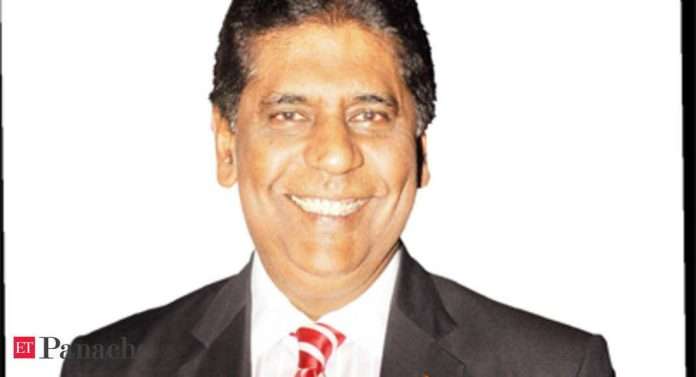
Tennis star Vijay Amritraj launches own fine wine collection with Grover Zampa Vineyards

0

[ad_1]

As Vijay Amritraj, one of India’s earliest international tennis stars, launched his own fine wine collection with Indian wine producer Grover Zampa Vineyards, it was only fitting that Wimbledon provided the background.

Amritraj unveiled the Vijay Amritraj Reserve Collection — a white and a red wine from Grover Zampa vineyards — at a celebrity-packed Wimbledon themed party at St James’ Court, a Taj Hotel in London, during the Wimbledon fortnight in July.

“I am passionate about wine. During my travels around the world, I have tasted and collected different kinds of wine and when Kapil Grover, one of the owners of Grover Zampa, suggested that I launch my own label with his company, I really liked the idea,” Amritraj told ET Magazine. While the Vijay Amritraj Reserve Collection, which was recently launched in India, is the first celebrity wine label in this country, the tennis ace joins famous golfers Ernie Els and Greg Norman, both of whom have their own wine collections and are passionate about wine. Els, a South African golfer, created the Ernie Els Wines label with its base in Stellenbosch, South Africa, in 1999.

Australian professional golfer Greg Norman has set up Greg Norman Estates, a collection of wines from regions in Australia, California and Argentina. But it’s not just celebrities who are passionate about wines and launch their own labels. Brian Schmidt, an Australian astrophysicist and Nobel laureate, owns Maipenrai, a vineyard and winery in Yass River Valley in Canberra, Australia, dedicated to making fine Pinot Noir wine. For his part, India’s first celebrity wine label owner, unlike the connoisseur golfers who have set up their own

winemaking outfits as well, so far is only a joint owner of the Vijay Amritraj Reserve brand with Grover Zampa on a royalty payment basis. But that doesn’t reduce his commitment to his wine brand. “I have been involved with the label since the beginning when we started planning it a few years back. From choosing the grape varieties for both the white wine (a barrelfermented varietal Viognier) and the red (a blend of Shiraz, Cabernet Sauvignon and Viognier) to designing the label, I have been involved at every stage,” he says. And he is proud about the final products, both of which, he says, were received well in London.

“While the product speaks for itself, such international recognition will also help showcase Indian wines globally,” Amritraj added.

Priced at £14.99 a bottle in the UK and Rs 1,200 in India, Grover Zampa now plans to take it to South East Asia and finally launch in the US .

“Our products are already available in about 10 international markets and we are now upbeat about taking the VA label to markets across Europe and the US,” says Sumedh Singh Mandla, chief executive officer of Grover Zampa.

Mandla adds that he is keen to prove that wines from Indian vineyards are comparable with those in the global markets.

Industry experts say the Amritraj and Grover Zampa tie-up could be the start of a global trend of celebrities associating with alcobeverage labels in India. “Vijay Amritraj could be a trendsetter in India, with cricketers and Bollywood stars soon looking at launching their own labels. However, wineries in India may not be able to afford tying up with topend endorsers unless the latter plan to invest in the winery they promote,” says Magandeep Singh, sommelier and wine consultant. He feels that a celebrity launch such as the Vijay Amritraj Reserve helps to take the brand mainstream. “The company will have to use the celebrity prominently to reach the maximum number of people. Just one launch won’t have far-reaching consequences,” he adds.

In the long term, he sees serious players investing in the wineries rather than going in for just a branding tie-up. “I’d rather have celebrities invest in a new winery as opposed to merely launching a brand with an existing house. We need more players with a sense for quality rather than everybody getting behind the same 2-3 brands in India,” adds Singh. Though India’s top wine producer Sula Vineyards has not yet partnered with celebrities for any of their labels, founder and CEO Rajeev Samant believes that sometimes personalities could have a very positive rub-off on wines. “While the trend is yet to catch on in India, we have a collaboration with artist Jaideep Mehrotra — the label on our Satori Merlot Red Wine is an exclusive painting by him,” says Samant.

[ad_2]

The above news was originally posted on economictimes.indiatimes.com

Tennis star Vijay Amritraj launches own fine wine collection with Grover Zampa Vineyards

0

[ad_1]

As Vijay Amritraj, one of India’s earliest international tennis stars, launched his own fine wine collection with Indian wine producer Grover Zampa Vineyards, it was only fitting that Wimbledon provided the background.

Amritraj unveiled the Vijay Amritraj Reserve Collection — a white and a red wine from Grover Zampa vineyards — at a celebrity-packed Wimbledon themed party at St James’ Court, a Taj Hotel in London, during the Wimbledon fortnight in July.

“I am passionate about wine. During my travels around the world, I have tasted and collected different kinds of wine and when Kapil Grover, one of the owners of Grover Zampa, suggested that I launch my own label with his company, I really liked the idea,” Amritraj told ET Magazine. While the Vijay Amritraj Reserve Collection, which was recently launched in India, is the first celebrity wine label in this country, the tennis ace joins famous golfers Ernie Els and Greg Norman, both of whom have their own wine collections and are passionate about wine. Els, a South African golfer, created the Ernie Els Wines label with its base in Stellenbosch, South Africa, in 1999.

Australian professional golfer Greg Norman has set up Greg Norman Estates, a collection of wines from regions in Australia, California and Argentina. But it’s not just celebrities who are passionate about wines and launch their own labels. Brian Schmidt, an Australian astrophysicist and Nobel laureate, owns Maipenrai, a vineyard and winery in Yass River Valley in Canberra, Australia, dedicated to making fine Pinot Noir wine. For his part, India’s first celebrity wine label owner, unlike the connoisseur golfers who have set up their own

winemaking outfits as well, so far is only a joint owner of the Vijay Amritraj Reserve brand with Grover Zampa on a royalty payment basis. But that doesn’t reduce his commitment to his wine brand. “I have been involved with the label since the beginning when we started planning it a few years back. From choosing the grape varieties for both the white wine (a barrelfermented varietal Viognier) and the red (a blend of Shiraz, Cabernet Sauvignon and Viognier) to designing the label, I have been involved at every stage,” he says. And he is proud about the final products, both of which, he says, were received well in London.

“While the product speaks for itself, such international recognition will also help showcase Indian wines globally,” Amritraj added.

Priced at £14.99 a bottle in the UK and Rs 1,200 in India, Grover Zampa now plans to take it to South East Asia and finally launch in the US .

“Our products are already available in about 10 international markets and we are now upbeat about taking the VA label to markets across Europe and the US,” says Sumedh Singh Mandla, chief executive officer of Grover Zampa.

Mandla adds that he is keen to prove that wines from Indian vineyards are comparable with those in the global markets.

Industry experts say the Amritraj and Grover Zampa tie-up could be the start of a global trend of celebrities associating with alcobeverage labels in India. “Vijay Amritraj could be a trendsetter in India, with cricketers and Bollywood stars soon looking at launching their own labels. However, wineries in India may not be able to afford tying up with topend endorsers unless the latter plan to invest in the winery they promote,” says Magandeep Singh, sommelier and wine consultant. He feels that a celebrity launch such as the Vijay Amritraj Reserve helps to take the brand mainstream. “The company will have to use the celebrity prominently to reach the maximum number of people. Just one launch won’t have far-reaching consequences,” he adds.

In the long term, he sees serious players investing in the wineries rather than going in for just a branding tie-up. “I’d rather have celebrities invest in a new winery as opposed to merely launching a brand with an existing house. We need more players with a sense for quality rather than everybody getting behind the same 2-3 brands in India,” adds Singh. Though India’s top wine producer Sula Vineyards has not yet partnered with celebrities for any of their labels, founder and CEO Rajeev Samant believes that sometimes personalities could have a very positive rub-off on wines. “While the trend is yet to catch on in India, we have a collaboration with artist Jaideep Mehrotra — the label on our Satori Merlot Red Wine is an exclusive painting by him,” says Samant.

[ad_2]

The above news was originally posted on economictimes.indiatimes.com

Social Media Auto Publish Powered By : XYZScripts.com