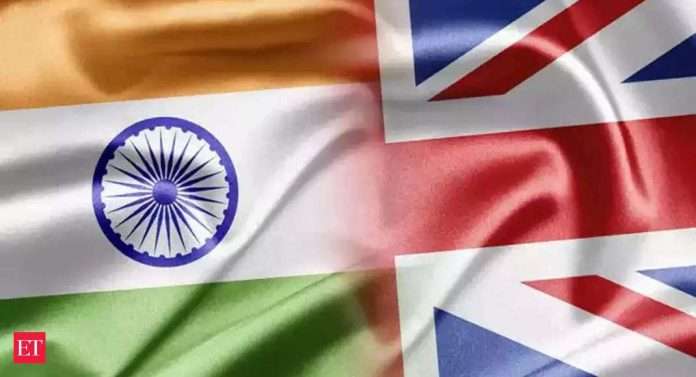
Whisky, cars, vaccines, basmati rice, wool, and tea pre-mix top a list of 240 odd products the Indian industry has identified for import duty cuts in the United Kingdom under a proposed free trade agreement (FTA) between the two countries. The industry has come up with the list of products for greater market access in the UK as the two countries gear up to launch formal negotiations on an FTA.”An FTA with the UK will offset some of the disadvantages that India has vis-a-vis Vietnam” and boost India’s share in the UK’s imports over the coming years, said Ajay Sahai, director general of Federation of Indian Export Organisations (FIEO). The federation has called for doing away with the 4% import duty on wool and yarn as no such duty is paid by other European and Turkish suppliers to the UK, and 3.1% duty on instant coffee.
An FTA with the UK is significant for Indian exporters because their rivals from Bangladesh, Sri Lanka and Pakistan enjoy duty-free benefits under the UK’s Generalised Scheme of Preferences.
The two countries will start joint scoping discussions on October 1 to finalise the terms of reference to launch the negotiations in November, the government had said recently.
They plan to put in place an interim agreement by March 2022 followed by a comprehensive agreement.
The interim trade pact would involve early tariff or market access concessions on certain key high priority products and services, the two sides had decided last week.
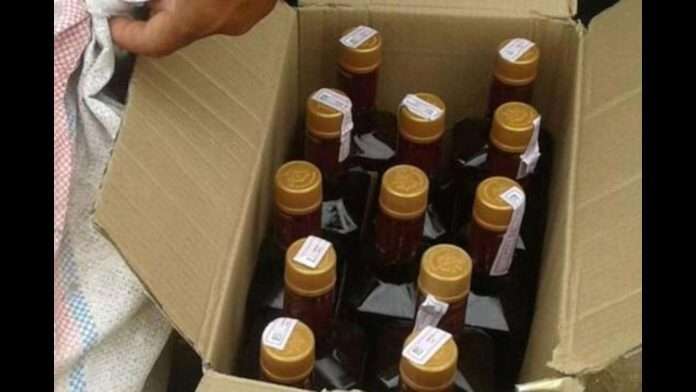
Indian industry is also keen to gain market access for its whisky in the UK. Out of the around 73 million cases of alcoholic beverages that India had exported in 2019-20 only 30,000 cases went to the UK and EU combined.
The UK has put in place barriers such as the requirement of grain-based spirit, something that most Indian companies can’t fulfil as liquor here is mostly made from molasses due to high sugar production. Another parameter mandates that the whisky should’ve aged for three years.
Confederation of Indian Alcoholic Beverage Companies (CIABC) has pushed for Indian whiskies to be allowed to be sold in the UK as whiskies irrespective of whether they are made from malt, grain spirits or molasses-based spirits.
Barneys Hard Seltzer is a new age alcoholic drink, a refreshing alternative to beer, wine and cocktails.
Alcobev Startup Barbrew coming up with Barneys Hard Seltzers has raised its Angel Round of funding of INR 2.5 CR from ah! Ventures Angel Platform and Others.
Barneys Hard Seltzer is a new age alcoholic drink, a refreshing alternative to beer, wine and cocktails. The drink is a zero sugar/ low calorie alcoholic beverage crafted precisely with premium elements to give you a 7 star experience. It is that perfect blend which is not too fizzy and not too sweet. With 6% ABV, it’s the day drinkers best friend.
Today’s generation is all about experiencing new things and hence they are relishing the idea of Barneys being a fitness drink. With a market potential of 90 billion bottles every year, Barneys strongly believes to be a youth and lifestyle brand, an easy on-the-go drink for both men and women, thereby uniting the generation.
At its core, Barneys is addressing three major pain points from creating a seltzer segment in India to ensuring uniqueness and being a healthy substitute.
“While most of us suffered with lockdowns, faced difficulty in getting even the basics. There were people who still stood in a long queue of 4 kms to get a bottle of anything. Pandemic certainly gave birth to Barneys with extremely new and vibrant blends, hence tapping an untapped market. There was no R&D on the Day -1, it was simply T&F – Try & Fail. And after 6 months of efforts, Barbrew succeeded in making patent pending blends” said Ruchi Gupta, Co-Founder, Barbrew Beverages.
“With Barneys Hard Seltzer, we aim to create a whole new style of drinking, a different perspective for every day moments. Taste matters to a consumer and they tend to associate with the same. And so we have ensured that Barneys isn’t just a flavor. The idea is also to take the brand global and not just remain local” added Ruchi Gupta.
“Well, it’s the Barneys season. Come celebrate this one life you’ve got. Do it your way. Whatever that means. And don’t forget to get your bro and bro’s along” added Gaurav Sharma, Co-Founder, Barbrew Beverages.
“We are delighted to continue our association with Barneys. Consumers always want something new and fresh especially in the F&B segment. We believe the newness being offered by Barneys with respect to the product, segment and positioning will excite everyone. Hard Seltzers is largely an untapped segment in India and we feel a lot of buzz is waiting to happen in the near future” stated Amit Kumar, Senior Partner, ah! Ventures.
This is ah! Ventures’s 25th investment in 2021 and 5 more investments will be announced shortly. This is ah! Ventures’ 88th investment (in 69 Startups) taking its total investment portfolio to INR 231 CR (~31 MN USD) with 11 exits and 18 follow on rounds till date.
New Delhi, Sep 20 (PTI) The Delhi High Court Monday sought response of the Delhi government on two pleas by retail liquor vendors seeking to extend their licences in particular categories till November 16 in parity with other categories under the provisions of the Delhi Excise Act.
A bench of Chief Justice D N Patel and Justice Amit Bansal issued notice and asked the Delhi government to respond on an application filed by Delhi Liquor Traders Association.
The association, represented through senior advocate Sidharth Luthra, sought parity with other licence holders who have been granted extension till November 16, while these private retailers have been told that their licences will not be renewed or extended beyond September 30, in view of the new Excise Policy of Delhi.
A similar petition was also filed by by one Rattan Singh and the court asked the authorities to respond to it.
The court listed both the pleas for further proceedings on September 24, when other batch of matters challenging the tender process and the new Excise Policy are coming up for hearing.
The association, which claims to represent 143 licenced liquor traders in Delhi, has filed the present application in its pending petition in which it has contended that the New Excise Policy 2021 restores the ”Zamindari” system abolished by the Constitution and facilitates a monopolistic cartel.
The application said the Delhi government had issued an order on September 10 regarding the extension or renewal of retail licences till November 16 in category L-6 (retail vendors of Indian liquor or beer), L-6FG (retail vend of foreign liquor in public sector to the holder of license in form of L-6) and L-6FE (retail vend of foreign liquor in public sector) but the category of the petitioners have not been considered.
The office of the respondent has extended the period of licence of other similar retailers in Delhi which are being operated by government corporations, it said.
The petitioners, who are holding L 7 (retail vend of Indian Liquor in private sector) and L 10 (retail sale of Indian and foreign liquor) licences, sought direction to extend their licences also till November 16, in parity with other categories.
The plea said the petitioners have separately given their objections to the authorities requesting for extension of licences but no reply has been received.
“The notice dated September 10 stating not to extend/renew the applicant”s private retail licences beyond September 30 and to further liquidate the applicant”s stock accordingly is highly discriminatory, biased and arbitrary in nature as the notice is only applicable on the categories of L-7 L-l0 exclusively and not on other categories,” it said.
It further said that the notice is not in parity with the other retailers and is in violation of Article 14 (equality before law) of the Constitution and in case the discrimination and disparity is not removed, it will amount to grave depravity and miscarriage of justice on the part of the authorities.
Several petitions challenging the new Excise Policy are pending before the court which had earlier refused to grant any stay. PTI SKV SKV RKS
Kolkata-based Celebrity Breweries plans to invest more than ₹100 crore in the West Bengal beer market, a top company official said. The company has its own brands and is also a major contract manufacturer of beer for leading brands like the World’s largest brewer Anheuser-Busch InBev and United Breweries.
“The company has plans of investing more than 100 crore in West Bengal beer market. Investment in upgradation of the equipment related to improve quality checks and automation to match global brewery standards,” Celebrity Breweries Chief Operating Officer, Vishal Kumar said.
The West Bengal government to provide an impetus to breweries in the state has reduced duty slabs and permitted the production of non-alcoholic malt beverages. The West Bengal government has introduced a non-alcoholic beer policy.
“Introduction of NAB policy being a first-of-its-kind in India will help global companies to come with more investment towards west Bengal. Currently entire demand for NAB is being met completely through imports and not being manufactured within India,” Kumar said.
“We are going to set up the first de-alcoholizer module in India. This model is being imported from Sweden and ₹50 crore is being invested in this module along with peripherals,” he said.
The company was also coming up with a foreign liquor manufacturing facility and is in talks with other major players in the market to manufacture premium and super premium foreign liquor brands in the state, he added.
This is ah! Ventures’ 25th investment in 2021 and 5 more investments will be announced shortly. This is ah! Ventures’ 88th investment (in 69 Startups) taking its total investment portfolio to INR 231 CR (~31 MN USD) with 11 exits and 18 follow on rounds till date.
Alcobev Startup Barbrew coming up with Barneys Hard Seltzers has raised its Angel Round of funding of INR 2.5 CR from ah! Ventures Angel Platform and Others. This is ah! Ventures’s 25th investment in 2021 and 5 more investments will be announced shortly. This is ah! Ventures’ 88th investment (in 69 Startups) taking its total investment portfolio to INR 231 CR (~31 MN USD) with 11 exits and 18 follow on rounds till date.
Barneys Hard Seltzer is a new age alcoholic drink, a refreshing alternative to beer, wine and cocktails. The drink is a zero sugar/ low calorie alcoholic beverage crafted precisely with premium elements to give you a 7 star experience. It is that perfect blend which is not too fizzy and not too sweet. With 6% ABV, it’s the day drinkers best friend.
Today’s generation is all about experiencing new things and hence they are relishing the idea of Barneys being a fitness drink. With a market potential of 90 billion bottles every year, Barneys strongly believes to be a youth and lifestyle brand, an easy on-the-go drink for both men and women, thereby uniting the generation.
At it’s core, Barneys is addressing three major pain points from creating a seltzer segment in India to ensuring uniqueness and being a healthy substitute.
“While most of us suffered with lockdowns, faced difficulty in getting even the basics. There were people who still stood in a long queue of 4 kms to get a bottle of anything. Pandemic certainly gave birth to Barneys with extremely new and vibrant blends, hence tapping an untapped market. There was no R&D on the Day -1, it was simply T&F – Try & Fail. And after 6 months of efforts, Barbrew succeeded in making patent pending blends.”, said Ruchi Gupta, Co-Founder, Barbrew Beverages.
“With Barneys Hard Seltzer, we aim to create a whole new style of drinking, a different perspective for every day moments. Taste matters to a consumer and they tend to associate with the same. And so we have ensured that Barneys isn’t just a flavor. The idea is also to take the brand global and not just remain local.”, added Ruchi Gupta.
“Well, it’s the Barneys season. Come celebrate this one life you’ve got. Do it your way. Whatever that means. And don’t forget to get your bro and bro’s along.”, added Gaurav Sharma, Co-Founder, Barbrew Beverages.
“We are delighted to continue our association with Barneys. Consumers always want something new and fresh especially in the F&B segment. We believe the newness being offered by Barneys with respect to the product, segment and positioning will excite everyone. Hard Seltzers is largely an untapped segment in India and we feel a lot of buzz is waiting to happen in the near future.”, stated Amit Kumar, Senior Partner, ah! Ventures.
The first Expression of Interest (EOI) for signing long-term agreement with upcoming dedicated Ethanol plants for the supply of Ethanol has received an overwhelming response, with 197 bidders participating in the same. The EOI was published by BPCL on behalf of Oil Marketing Companies under the guidance of the Ministry of Petroleum &Natural Gas on 27th August which opened on 17th September. The bids are currently under evaluation.
Thanking all the bidders for making the EOI successful and wishing them all the very best in their ventures, Union Minister of Petroleum and Natural Gas &Housing and Urban Affairs Shri Hardeep Singh Puri has said that this EOI is a proactive step taken by MoP&NG and Oil companies to motivate project proponents to set up ethanol production plants in ethanol deficit states, thereby paving the way forward for the nation in achieving the ethanol blending target of 20% and more in the coming years.
173 Cr litre Ethanol was procured last year and 5%blending was achieved during ESY – 2019-20. The target for ongoing year ESY – 2020-21 is 325 Cr litre which will take the blending to 8.5%. Actual achievement during ESY – 2020-21 so far has been 243 Cr litre, accounting for 8.01% blending.
The Government has announced five different rates for Ethanol based on feedstock used for Ethanol production.
GST and Transportation charges are being paid extra. Besides, other incentives being provided for Ethanol production are: Long term visibility/Off take Assurance; Interest subvention Scheme for capacity addition; Differential remunerative price of ethanol; Relaxed EOI conditions/Reduced Bank Guarantee requirements and Penalty for non-supply; and Procurement priority within State boundary limits.
Kolkata, Sep 20 (PTI) City-based Celebrity Breweries plans to invest more than Rs 100 crore in the West Bengal beer market, a top company official said.
The company has its own brands and is also a major contract manufacturer of beer for leading brands like the World”s largest brewer Anheuser-Busch InBev and United Breweries.
“The company has plans of investing more than 100 crore in West Bengal beer market. Investment in upgradation of the equipment related to improve quality checks and automation to match global brewery standards,” Celebrity Breweries Chief Operating Officer, Vishal Kumar told PTI.
The West Bengal government to provide an impetus to breweries in the state has reduced duty slabs and permitted the production of non-alcoholic malt beverages. The West Bengal government has introduced a non-alcoholic beer policy.
“Introduction of NAB policy being a first-of-its-kind in India will help global companies to come with more investment towards west Bengal. Currently entire demand for NAB is being met completely through imports and not being manufactured within India,” Kumar said.
“We are going to set up the first de-alcoholizer module in India. This model is being imported from Sweden and Rs 50 crore is being invested in this module along with peripherals,” he said.
The company was also coming up with a foreign liquor manufacturing facility and is in talks with other major players in the market to manufacture premium and super premium foreign liquor brands in the state, he added. PTI BSM
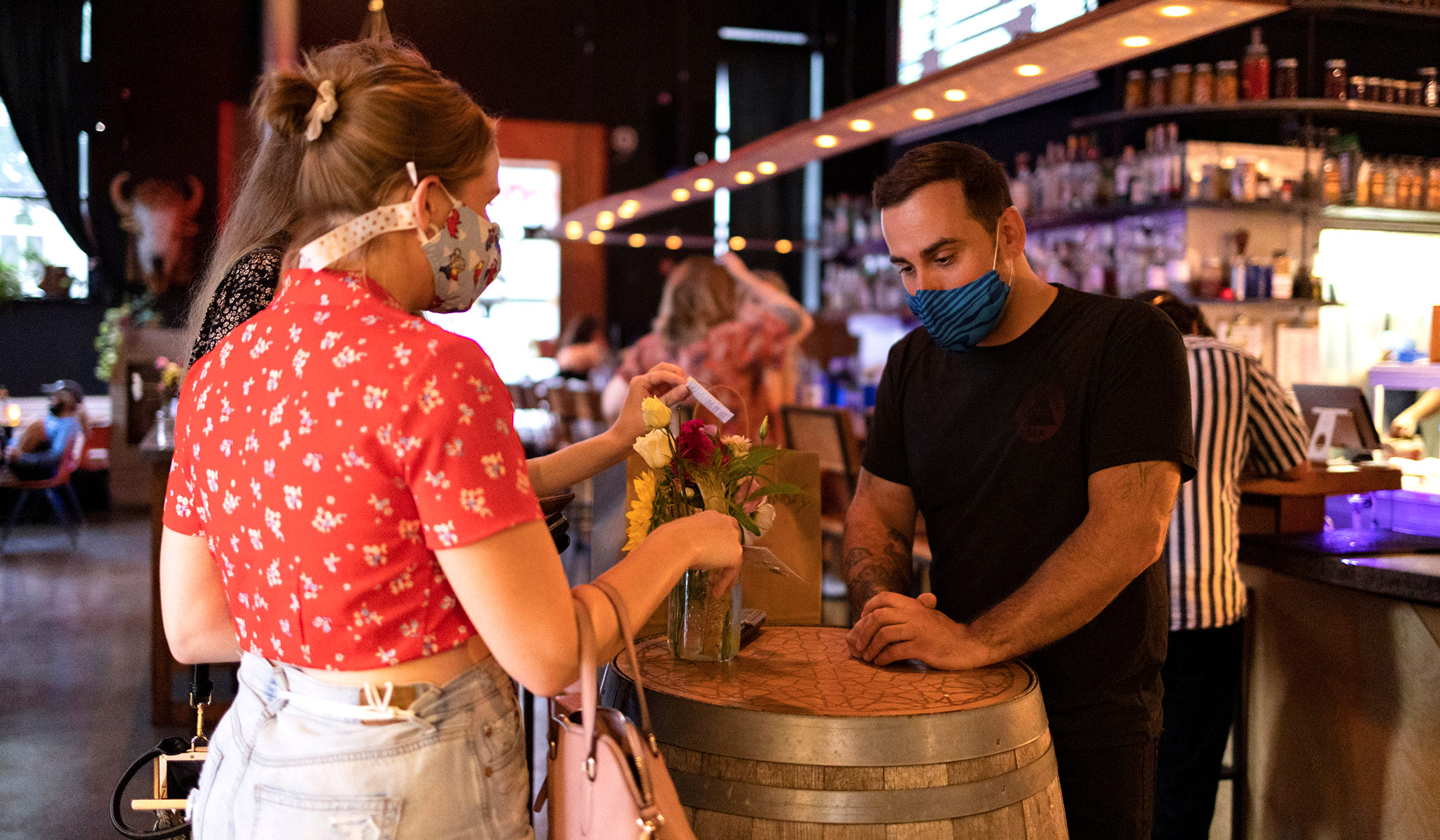
Customers show proof of their COVID vaccinations before entering the Martha restaurant in Philadelphia, Pa., August 7, 2021. (Hannah Beier/Reuters)
Now is not the time to hammer food establishments trying to crawl out of the pandemic.
The pandemic and related closures hit the restaurant industry hard, with about 90,000 eateries closing permanently. When the pandemic finally subsides, America will need entrepreneurs to launch new restaurants and fill the void.
But restaurant entrepreneurs face government barriers. Before opening in New York City, for example, a “restaurant may need to obtain as many as 30 permits, registrations, licenses, and certificates and could face as many as 23 separate inspections.”
In many states, alcohol licensing can be the largest barrier. By my count, there are 18 states that, using per capita formulas, cap the number of licenses in cities and counties. The caps can make restaurant launches very costly or block them entirely, particularly when businesses want to serve liquor in addition to beer and wine.
In the states with caps, entrepreneurs can buy a liquor license from a restaurant that is closing, but they can cost a fortune. Licenses cost up to $300,000 in Alaska and California, $445,000 in Florida, $250,000 in Idaho, $400,000 in Indiana and Massachusetts, $370,000 in Montana, $350,000 in New Jersey and Pennsylvania, and $300,000 in South Dakota.
These high costs favor corporate chains with deep pockets over independent entrepreneurs. License restrictions also increase risks, because entrepreneurs usually need to sign leases and start paying rent before they know whether a license will be available and be approved by officials months down the road. Obtaining a license can be crucial, as restaurants earn a large share of their profits from alcohol.
States and cities with tight alcohol-license caps strangle economic development and neighborhood revitalization. The poorest neighborhoods suffer the most, because entrepreneurs there cannot afford the high license costs. News stories across the country highlight the unfairness and needless harm done by license restrictions.
In Boston, it costs about $400,000 for a liquor license and $150,000 for a beer-and-wine license. As a result, the Boston Globe reported, some poorer “neighborhoods have largely missed out on Boston’s restaurant boom, as developers and restaurateurs in wealthier parts of the city pay top dollar to secure the available licenses.” One study found that the wealthiest one quarter of census tracts in the city hold more than half of the available licenses.
In Pennsylvania, Hamir Patel, the chef and owner of a downtown restaurnt, opened Hamir’s Indian Fusion in 2018. “By his estimate, it would take him another three or four years before he can afford to purchase a liquor license,” according to the York Daily Record. “He said the cheapest license he has found has cost $350,000 to $400,000 — a price he can’t afford. Without a license, he believes he is suffering at least a 25 percent loss in potential revenue.”
In South Dakota, Rudy Navarrete, a Sioux Falls, entrepreneur closed his restaurant because, according to the Argus Leader, the city’s “liquor laws also makes it hard for anyone local to run a restaurant unless they’re a franchisee of a national chain. With the cost of a full on-sale liquor license often topping $300,000, Navarrete was never able to afford the ability to have a full bar and serve up high-end margaritas to his customers, he said. ‘It’s just kind of set up for franchises to succeed.’”
The Argus Leader also profiled Ted Thoms, who “still sees potential in the grassy lot at West 12th Street and Sertoma Avenue where he once hoped to open a steakhouse. . , , He filed for a liquor license from City Hall. Ten years later, his application was approved. By then, he’d sold the land, given up on the project and deemed the restaurant investment ‘one of the worst investments I’ve ever made.’”
In New Jersey, liquor licenses costing $350,000 are “crippling the state’s dining scene,” reported NorthJersey.com. The high cost is “often out of reach for independent chefs and restaurateurs. And without the ability to serve alcohol, ‘You can’t make any money,’ said Drew Nieporent, a celebrated New York restaurateur and former New Jersey resident. Nieporent has owned more than 40 restaurants . . . but refuses to open a restaurant in the Garden State.”
Meanwhile, chef Peter Loria “still recalls with disappointment the time he tried to open a restaurant in Ridgewood. He poured a chunk of his retirement savings into what he thought would become a destination for New Jersey food lovers, but he hit a common roadblock. ‘I couldn’t get a liquor license. . . . So it never opened. It was heartbreaking.’”
NorthJersey.com says that alcohol-license caps “are seen by local officials as holding back efforts to revitalize downtowns and attract new, often younger residents.” The caps frustrate “local officials and developers who have embarked on ambitious projects across the state to revitalize downtowns with new housing, entertainment and — crucially — restaurants.”
In San Francisco, “with the cost of a full liquor license . . . now running as much as $300,000, restaurant and bar owners in the city’s outlying, lower-income neighborhoods have been all but drained of the ability to serve liquor and cocktails — and the attendant profits.” The pandemic has reduced license costs somewhat, and California has pursued reforms to provide cheaper licenses for selected low-income areas.
But why don’t California and other states repeal those caps altogether as bottlenecks to inclusive economic growth? Partly it is because of old-fashioned views about controlling vices with top-down regulations. And partly it is because existing restauranters lobby against reforms that would devalue their high-cost licenses. In Sioux City, as noted in the Argus Leader, “attempts to change the law have failed or been watered down, as reformers fight against business groups that benefit from the current system, entrenched in South Dakota for decades.”
It is true that reform would undermine existing license holders, but the caps in 18 states are causing real damage, and the other 32 states are doing fine without them. So a compromise is needed — perhaps loosening the caps over time, leading to full repeal in the long run.
Restaurant entrepreneurs face many challenges, including finding workers and dealing with pandemic mandates from governments. An added challenge in 18 states is that government caps create artificial scarcity for alcohol licenses. Repealing the caps would benefit entrepreneurs and economic growth particularly in lower-income neighborhoods, and so it should be a reform that both liberals and conservatives can support.
Alco-beverage sales in India are expected to hit pre-Covid level numbers this fiscal recording sales of at least 340-345 million cases.
A stable tax environment and lesser disruption in trade; followed by rising demand for Indian made foreign liquor (IMFL) are seen as drivers.
Sales of IMFL declined by 12 per cent year-on-year during FY21 – to approximately around 300 million cases – due to the pandemic-induced lockdown and increase in taxes. As recoveries were being noticed in the H2 of FY21 – growth being back – the second wave of infections and lockdown-led restrictions hit sales.
According to Vinod Giri, Director General, Confederation of Indian Alcoholic Beverage Companies (CIABC) – an umbrella organisation of Indian liquor-makers – an expected 6-7 per cent growth on annualised basis is expected over numbers reported in the second half of last year. This should bring sales close to pre-Covid levels by the end of FY22.
Vinod Giri, Director General, Confederation of Indian Alcoholic Beverage Companies (CIABC)
“There were nearly 6-8 weeks of no sales in FY21 which severely impacted the industry. As numbers were inching-up, the second wave hit demand. However, second wave was not so bad in terms of sales as Governments were better prepared. So a strong growth in the first half over last year’s low base and sustained healthy increase in the second half should bring us back to pre-Covid level sales by the end of this fiscal,” he told BusinessLine in an interview.
Volume drivers
The 180 ml offerings continue to drive volumes in the country.
In the IMFL segment – whiskeys – are witnessing growth in terms of volume and value sales; while white spirits – gin and vodka – are witnessing “high growth albeit a lower-base”. However, despite the high growth, their contribution to overall alco-bev sales remain in “single digits”. A few states like West Bengal, Odisha, Andhra Pradesh and Telangana where tax structures continue to be “high” are outliers in terms of sales. But, there too sales growth should be back in absolute terms give large fall and low base last year
The home delivery of liquor or e-commerce model needs to be “fine-tuned” as it is “not the normal route-to-market” for alco-bev companies. End consumers pay more “as delivery charges” impact demand ultimately. A few organised retailers have however been selling at retail prices and at no extra cost. “The model needs fine tuning. It came up as a bolt on response to a crisis. But you need to evolve it – at both state government policy and company levels,” he added.
According to Giri, “downtrading” has also happened as sales in the premium and ‘bottled in origin” segments – especially for brands which generally had good off-take through duty free shops – remain impacted. The price difference – when purchased from a duty free versus regular shop – is “quite high” varying “50- 100 per cent” depending on the local tax structure of the state. Some select brands – normally available only in duty free – have been introduced through the general trade.
“Naturally there is some downtrading for select brands. But, the numbers should be back as restrictions on foreign travel are relaxed,” he said.
On the other hand, exports too are expected to “do well” and grow at 20%.
“Export markets are looking up too,” Giri said, adding that confederation has been representing the Centre to “push” for Indian alcoholic exports – across brands like Jaisalmer Gin, Rampur and Amrut in whiskeys, some newer brands distilleries from Goa, among others.
“We should look at creating brands from India that have global acceptance. India’s share is not even one per cent of total global trade. Some help is required at the government level too. We are, however, not calling for protection,” he said.
Citizens in Maharashtra may soon be able to say “cheers” to an enhanced taste of their favourite brand of liquor as the state government is planning to make it mandatory for liquor manufacturers to blend a certain percentage of grain-based alcohol in their products.
While boosting the dormant grain-based alcohol industry in Maharashtra, the state is looking at overcoming likely fluctuations in supply of molasses-based spirit for liquor manufacturers owing to distilleries diverting their stocks to oil marketing companies (OMCs) for blending ethanol in petrol.
Grain-based spirit is usually manufactured from maize and poor-quality or broken rice and jowar in Maharashtra. The proposed policy will cover country liquor (CL) and Indian-made foreign liquor (IMFL).
“Most of the grain-based distilleries in Maharashtra are shut. To revive them, we are planning to make it mandatory for liquor manufacturers to blend a certain percentage of grain-based spirits. The import duty on grain-based alcohol imported from other states will also be increased from the present ₹2 per litre to boost local industry,” said a senior state government official.
Of the 34 grain-based distilleries in Maharashtra, only around nine are operational. Compared to the installed capacity of around 40 crore litres, the production averaged at about 8-8.5 crore litres.
At present, manufacturers blend around 10% of grain-based spirits in their products, usually in premium brands, and the state plans to eventually increase this to around 40-50%.
“With sugar mills and distilleries getting good rates from OMCs for ethanol blending in petrol, and the cyclical nature of the sugarcane crop, it is necessary to push the production of grain-based alcohol in Maharashtra,” the official explained.
He added that though liquor prices could increase marginally, state excise revenues would also rise as the duty formula is based on cost of manufacturing. Farmers can also get better prices for their produce.
“Increasing the blending of grain-based alcohol will improve the taste and quality… It will reduce our dependence on molasses and help launch new brands,” said a liquor manufacturer. He added that as of now only a couple of multinationals manufacture their entire portfolio using grain-based spirits.
Nationalist Congress Party (NCP) legislator Mansingrao Naik, who controls a co-operative sugar mill and operates a private grain-based alcohol unit in Sangli, said only around three grain-based distilleries were operating at optimum capacity due to lack of demand.
“Unlike foreign countries, where liquor is distilled from grain, India has molasses-based products. Grain-based liquor is considered to be healthier than that using molasses,” he explained.
He added that sugar factories found it remunerative to sell molasses for fuel blending, and hence, the demand for grain alcohol was likely to rise in the future. But the prices of molasses-based alcohol sold to liquor manufacturers were marginally lower, around ₹50 per litre, compared to around ₹53-54 for grain spirits.
However, manufacture of grain-based spirit is a controversial issue in Maharashtra. The erstwhile Vilasrao Deshmukh government had launched a short-lived scheme—Food Grain-Based Distillery and Integrated Unit Financial Aid, 2007— to promote grain-based distilleries. This had raised the hackles of activists, who questioned the logic of diverting food-grains for producing liquor in a state that is food-deficit with endemic malnutrition and drought. The Comptroller and Auditor General (CAG) had also red-flagged lacunae in the scheme.
Valsa Nair Singh, principal secretary, state excise, denied comment on the contours of the policy.
In 2020-21, around 320 million litres of CL were sold in Maharashtra, followed by beer (300 million litres), IMFL (200 million litres) and wine (7 million litres).