
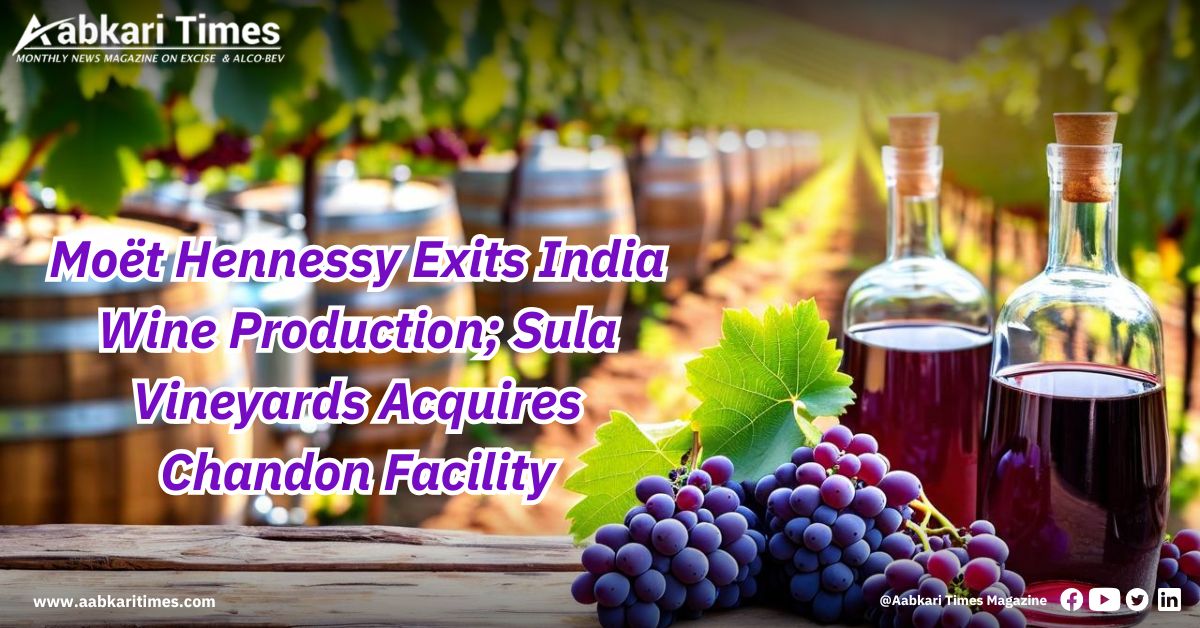
Moët Hennessy has decided to exit local wine production in India after more than a decade, selling its Chandon India winery to Sula Vineyards. The move highlights the growing challenges global liquor companies face in India’s complex and highly regulated alcohol market.
Sula Vineyards announced that it will acquire the Chandon India winery assets for ₹200 million (around $2.16 million). The facility is located in Dindori, Nashik, and spans about 19 acres, including winemaking infrastructure and associated real estate.
The winery currently has an annual production capacity of around 450,000 litres, which can be expanded to 1.3 million litres. The estate also features a visitor centre, banquet facilities, and around five acres of vineyards, making it suitable for both wine production and tourism activities.
→ France Wine Production Could Fall to 70-Year Low Amid Heat and Drought; India Emerges as Potential Market→ Vinexpo Discover India 2026 Registrations Open for New Wine and Spirits Business Forum in Mumbai
Rajeev Samant, Founder and CEO of Sula Vineyards, said the company plans to develop the site into a major wine tourism destination. Building on the success of its existing vineyard near Gangapur Lake in Nashik—which attracts over 300,000 visitors annually—Sula sees strong potential in turning the Dindori property into another premium wine resort.
The deal is expected to be completed by the end of the first quarter of FY2027, subject to regulatory approvals.
Headquartered in Mumbai, Sula Vineyards is one of India’s leading wine producers and a pioneer of the country’s modern wine industry. Founded in 1999, the company introduced international grape varieties like Chenin Blanc, Sauvignon Blanc, and Riesling to India. Over the years, it has expanded beyond winemaking into wine tourism, hospitality, and tasting experiences.
This acquisition also marks the exit of Moët Hennessy from local wine production in India. Since 2014, the company had been operating the Chandon India winery in Nashik as part of its global sparkling wine network. The brand was positioned as a premium locally produced sparkling wine and was available across more than 20 cities.
Following the acquisition, the winery will operate under Sula’s own brands, and the “Chandon” name will no longer be used in the Indian market.
The development reflects a broader trend of global liquor companies facing increasing regulatory and operational challenges in India. Complicated state-level taxation, strict distribution systems, and evolving consumer preferences have made it difficult to scale large investments.
At the same time, the move strengthens Sula’s position in India’s premium wine segment. However, the company will need to carefully manage the transition, build strong branding, and navigate regulatory complexities to fully realise the potential of the acquisition.
About the Author