
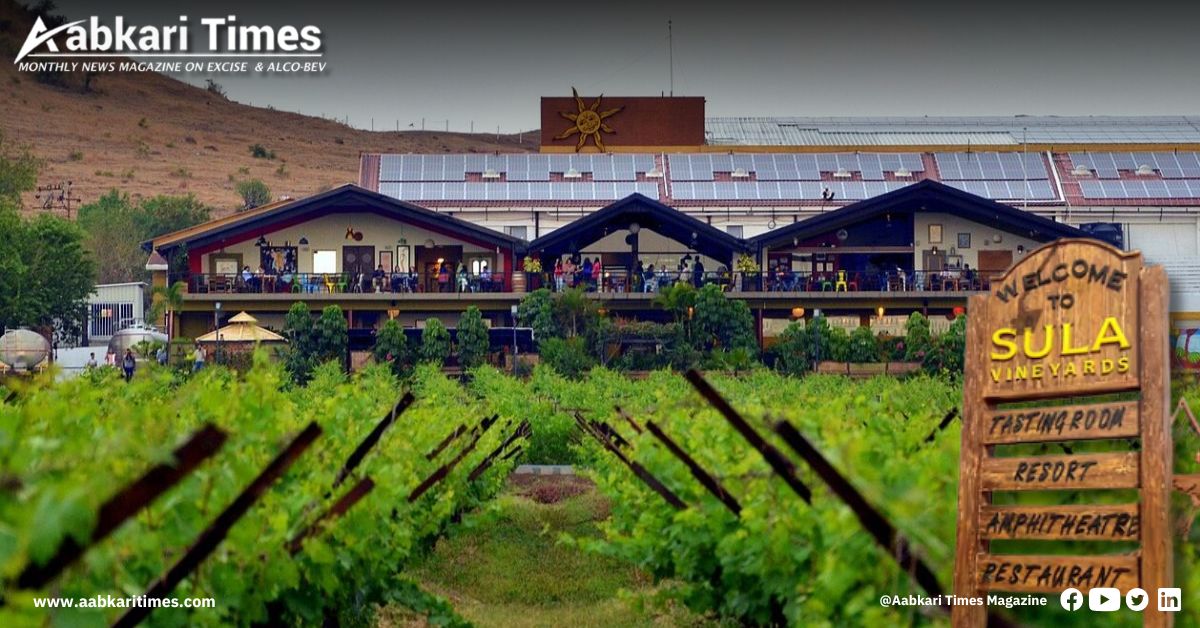
Sula Vineyards, India’s leading wine producer, is planning to build a new resort at the former Chandon winery site in Dindori, Nashik. This move comes as the company’s wine tourism business has crossed ₹100 crore in revenue for the first time, contributing around 20% of its total turnover.
The Dindori property was acquired from Moët Hennessy, part of LVMH, after their exit from India. Monit Ravindra Dhavale, Head of Hospitality at Sula, confirmed that the resort project will be announced soon, although it will take time to complete.
The location is expected to benefit from growing infrastructure and connectivity in Nashik. The city now has improved air links to major destinations such as Delhi, Bengaluru, Ahmedabad, Goa, and Indore, with flights to Kolkata set to begin soon. Additionally, new investments by companies like Reliance Life Sciences and Godrej Group are boosting the region’s development.
→ France Wine Production Could Fall to 70-Year Low Amid Heat and Drought; India Emerges as Potential Market→ Vinexpo Discover India 2026 Registrations Open for New Wine and Spirits Business Forum in Mumbai
Sula is also fast-tracking the reopening of the former Chandon tasting facility. Plans include launching a bottle shop, gift store, and tasting room shortly after regulatory approvals, while the resort will be developed in the medium term.
Wine tourism has become a major growth driver for the company. Around 40% of visitors to its Nashik campus take part in winery tours and tastings, with total annual footfall reaching 3 to 3.5 lakh visitors. Spending by day visitors has increased by nearly 50% in recent years. Weekend entry fees are priced at ₹1,000, and peak days can see up to 5,000 visitors.
Sula estimates it holds an 80–85% share of India’s wine tourism market, with properties including Sula, The Source at Sula, York, and the newly acquired Dindori site. Its latest hospitality venture, The Haven by Sula, launched in October 2024, saw strong demand during the peak season, especially for premium weddings. The company also maintains a strict policy requiring wine purchases for events hosted at its venues.
On consumer trends, Sula has observed a growing number of women wine drinkers, who now make up about 50% of tasting room visitors. Younger consumers are also increasingly choosing wine over beer and spirits. While moderation trends among Gen Z are rising, the company believes wine is better positioned due to its perception as a more refined and less intoxicating beverage.

Sula has also introduced canned wines to attract entry-level consumers, while keeping its premium offerings distinct.
Sustainability remains a key focus area for the company. By FY26, Sula expects nearly 75% of its energy needs to be met through solar power, supported by battery storage and biogas from winemaking waste. It also uses water recycling systems and converts grape waste into compost. Over the past decade, the company has planted more than one lakh trees across its Nashik properties and is targeting net-zero emissions by 2050.
With a market share of around 60–65%, Sula continues to dominate India’s wine industry and has held its leadership position for over a decade.
About the Author