
Distilled spirits are alcoholic drinks such as brandy, whisky, rum, and arrack that are produced through a process called distillation. These beverages are made from fermented liquids like wine, fruit juice, or plant-based materials. In some cases, starchy ingredients such as grains are first brewed and then distilled. Because of the distillation process, spirits contain a much higher level of alcohol compared to beverages like beer or wine.
The production of distilled spirits begins with fermentation. Fermentation is a natural process in which microorganisms, mainly yeast, break down carbohydrates or sugars to produce alcohol. Yeast thrives in environments rich in sugars and has been found in almost every part of the world, from frozen regions to deserts.
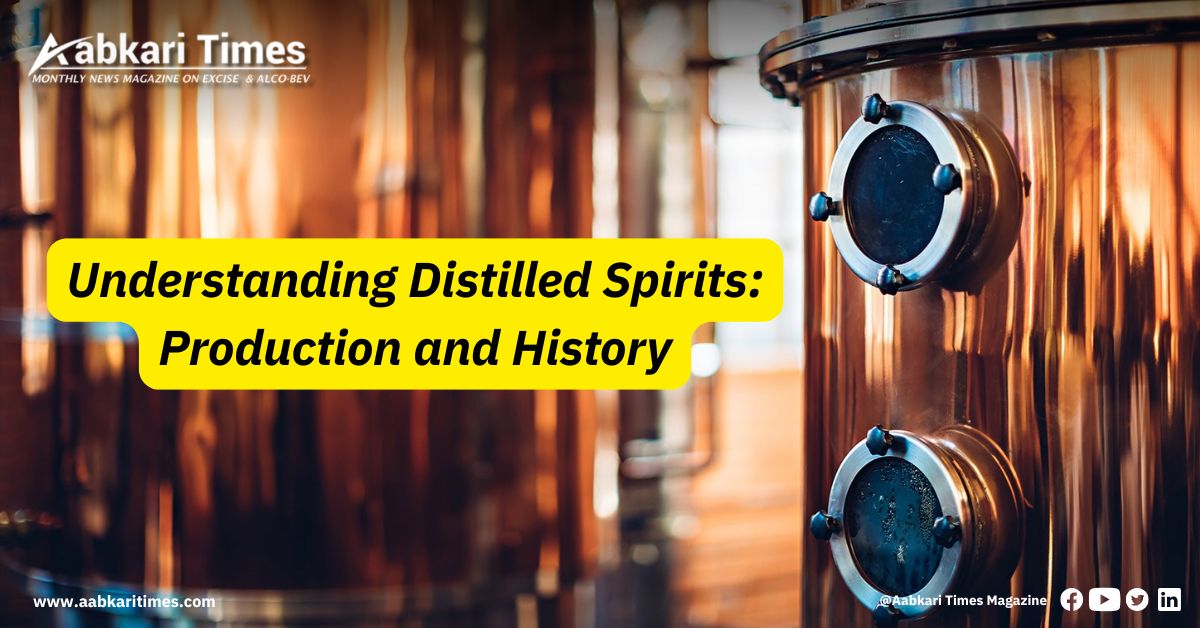
Distillation works by heating the fermented liquid to separate alcohol from water. Alcohol boils at about 78.5°C, while water boils at 100°C. When the liquid is heated between these temperatures, alcohol vapor rises first. This vapor is then cooled and condensed, producing a liquid with a higher concentration of alcohol.
→ Allied Blenders Approves ₹125 Crore for 3 Million BL Malt Distillery in Aurangabad→ West Bengal Declares Maha Ashtami 2026 as Dry Day for Durga Puja
The history of distillation dates back thousands of years. Evidence suggests that people in China were distilling beverages from rice beer as early as 800 BCE. In the East Indies, arrack was produced from sugarcane and rice. Arab scientists also developed early distillation techniques, which later spread to Europe. Greek philosophers described basic distillation methods, and although the Romans likely produced distilled drinks, written records about them appear only after the first century CE.
Initially, distilled spirits were made mainly from sugar-based materials such as grapes and honey, resulting in products like grape brandy and distilled mead. The use of grains for distillation became common during the Middle Ages. Over time, governments began regulating the production and sale of spirits, especially from the 17th century onward, as the industry became a significant source of revenue.

Early distillation equipment was quite simple, consisting of a heated container, a condenser, and a vessel to collect the condensed liquid. These later evolved into pot stills, which are still used today for producing certain types of whisky and gin. In the early 19th century, continuous distillation systems were developed in France and England. A major advancement came in 1831 when Irish inventor Aeneas Coffey designed a two-column continuous still, greatly improving efficiency in large-scale production.
Distillation requires a significant amount of heat, and the fuel used has historically depended on what was available locally. In earlier times, peat, coal, and wood were commonly used. Today, modern distilleries typically rely on fuels such as coal, natural gas, or oil to power the process.
About the Author