
India continues to be one of the world’s largest and fastest-growing alcohol markets. In 2024–25, the country sold over 40 crore cases of Indian Made Foreign Liquor (IMFL), marking a 1.38% rise from the previous year.
Amid these national figures, one small region stands out — Chandigarh.
With a population of just about 12.5 lakh, Chandigarh may rank only 22nd in total IMFL sales, but when population is factored in, it emerges as one of India’s highest per capita consumers of alcohol.
National sales snapshot
According to data compiled by the Confederation of Indian Alcoholic Beverage Companies (CIABC):
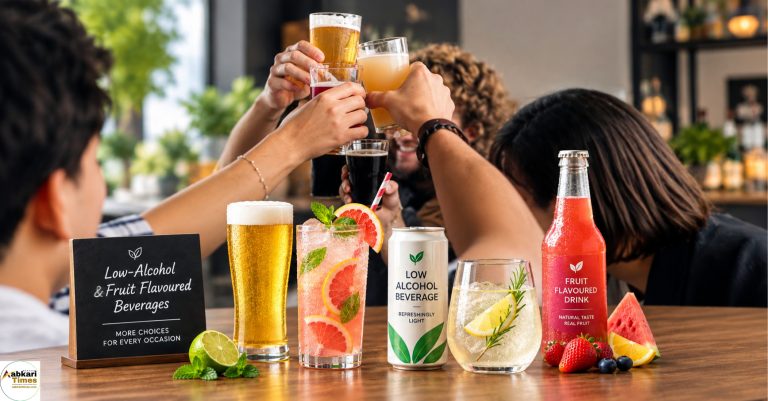
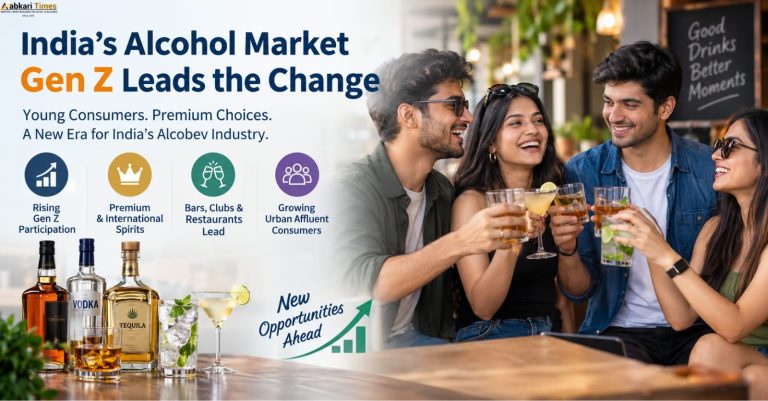
→ India’s Alcobev Market Sees Growing Interest in Low-Alcohol and Fruit-Flavoured Drinks→ India's AlcoBev Sector at Structural Inflection Point; HSIE Research Sees Decade of Growth Driven by Premiumisation and Excise Reforms
-
Total IMFL sales rose from 39.62 crore cases in 2023–24 to 40.17 crore cases in 2024–25.
-
Southern states dominate the market, contributing nearly 58% of total sales.
-
Karnataka led with 6.88 crore cases, followed by Tamil Nadu (6.47 crore), Telangana (3.71 crore), Andhra Pradesh (3.55 crore) and Kerala (2.30 crore).
-
In the north, Uttar Pradesh sold 2.51 crore cases, Rajasthan 1.37 crore and Haryana 1.18 crore.
-
Delhi recorded 1.18 crore cases, down about 6% from last year.
-
Maharashtra sold 2.72 crore cases.
These figures include only IMFL — such as whisky, rum, vodka, gin and brandy — and do not cover imported foreign liquor (IFL) or country liquor.
Why Chandigarh stands out
Chandigarh’s IMFL sales for 2024–25 were 17.39 lakh cases. Divided by its population of roughly 12.5 lakh, that equals around 1.39 cases per person per year.
The national average stands at about 0.28 cases per person, meaning Chandigarh’s IMFL consumption is nearly five times higher.
When all liquor categories are included — IMFL, IFL and country liquor — the numbers are even more striking.
Between April 2025 and January 31, 2026, Chandigarh sold:
-
17,39,329 IMFL cases
-
1,18,518 IFL cases
-
4,44,444 country liquor cases
That brings total sales to 23,02,291 cases in under a year.
This works out to roughly 1.84 total liquor cases per resident annually — over 6.5 times the national IMFL per capita average.
Per adult consumption is even higher
If calculated against the adult population (15 years and above), estimated at about 10 lakh, consumption rises to approximately 2.3 cases per adult annually, or nearly 28 bottles per adult per year.
Among those legally eligible to drink (25 years and above, around 6.7 lakh people), the number climbs further — about 3.44 cases per eligible adult, or more than 41 bottles per year.
How Chandigarh compares to big states
Even high-consuming southern states fall behind when measured per person:
-
Karnataka: about 1.01 cases per person
-
Telangana: around 0.95
-
Tamil Nadu: roughly 0.83
-
Kerala: about 0.64
Large states like Maharashtra (0.22) and Uttar Pradesh (0.10) record much lower per capita figures because of their large populations.
Five-year trend
Over five financial years (2021–22 to January 2026), Chandigarh recorded total liquor sales of more than 1.1 crore cases — translating to about 13.21 crore bottles.
The sharpest increase came in 2022–23, when sales jumped nearly 16% after changes in excise policy and competitive auctioning of liquor vends. Since then, annual sales have remained above 22 lakh cases.
In 2025–26, sales have already crossed 23 lakh cases by January 31, suggesting the final number could exceed 24 lakh cases if the trend continues.
What explains the high numbers?
Chandigarh’s excise officials attribute the trend to a mix of:
-
Higher disposable incomes
-
Dense urban population
-
Structured and liberal retail policies
-
Strict enforcement mechanisms
The result is a relatively small but highly active liquor market — making Chandigarh one of India’s most liquor-intensive territories on a per capita basis.
About the Author