
Alcohol Industry in 2026: Growth to Come from Premiumisation, Not Volumes
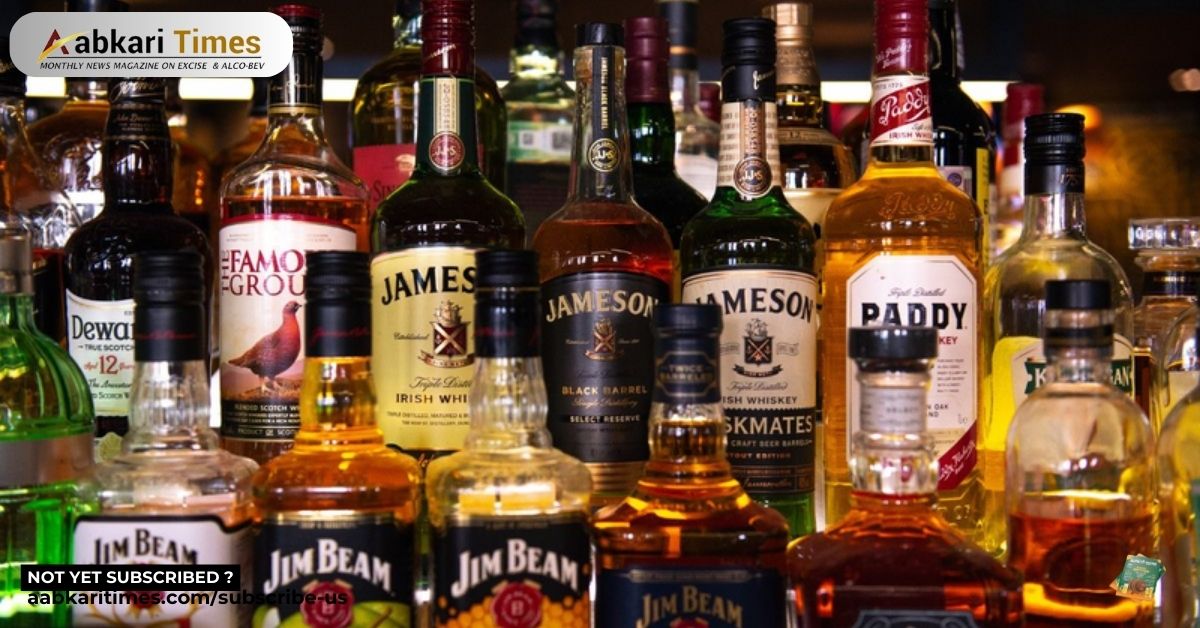
India’s alcoholic beverages industry is heading into 2026 on a strong footing, with growth expected to be driven more by value and product mix rather than pure volume expansion, according to Anant S. Iyer, Director General of the Confederation of Indian Alcoholic Beverage Companies (CIABC).
Reflecting on 2025, Iyer said the global and domestic alcohol industry delivered a solid financial performance despite inflationary pressures, tighter regulation and shifting consumer preferences. Premium product growth, disciplined pricing, brand-led innovation and better cost management helped producers protect margins even as volume growth remained uneven across regions.
Looking ahead, the industry’s momentum will be shaped largely by changing consumer behaviour. Rising incomes, urban lifestyles, a growing legal drinking-age population, recovery in on-trade consumption and increased travel-linked demand are expected to support steady growth, especially for premium and above segments in spirits and wines. In contrast, the mass and country liquor segments may face headwinds.
→ India’s Alcobev Market Sees Growing Interest in Low-Alcohol and Fruit-Flavoured Drinks→ India's AlcoBev Sector at Structural Inflection Point; HSIE Research Sees Decade of Growth Driven by Premiumisation and Excise Reforms
India, Iyer noted, is witnessing more selective and mindful consumption rather than a move away from alcohol. Consumers may drink less frequently, but they are increasingly choosing quality, provenance and occasion-driven consumption over excess. This nuance, he said, is often overlooked when global sobriety trends are applied directly to the Indian market.
2025: A Year of Resilience
The past year underlined the resilience of India’s alcohol industry. Demand remained healthy across regions, supported by IMFL volumes, urbanisation, rising disposable incomes and the revival of bars, restaurants and travel retail. Growth was broad-based and sustainable, with participation across price segments.
However, outcomes varied sharply across states. Where excise policies were stable and pricing mechanisms responsive, demand translated smoothly into revenues. In states marked by abrupt policy changes, pricing freezes or uneven regulatory treatment, results were mixed. This divergence highlighted the growing importance of governance quality in determining fiscal outcomes.
The industry’s financial health also improved, with stronger cash flows, better cost absorption and disciplined capacity utilisation replacing aggressive, debt-led expansion. Even in states undergoing policy transitions, demand held firm, reinforcing the sector’s role as a reliable contributor to state revenues.
Policy Stability Over Rate Hikes
Iyer stressed that predictable and well-designed policies matter more than frequent tax hikes. Measures such as digitisation, simplified licensing, rational fee structures and stronger enforcement have proven more effective in sustaining excise revenues than increasing duties alone.
He cautioned against policy-driven market distortions, citing examples where regulatory design — rather than consumer choice — redirected demand, leading to commoditisation and reduced investment. Such approaches, he warned, can weaken long-term revenue stability.
Key Priorities for 2026
For 2026, CIABC’s focus is on structural reforms rather than short-term fixes. Policy predictability, competitive neutrality and administrative efficiency are seen as critical to converting healthy demand into stable revenues, higher investment, exports and employment.
A major concern remains uneven policy application across states, especially pricing rigidity and sudden fiscal interventions. CIABC analysis shows that states with calibrated duty structures and timely price revisions consistently outperform those relying on ad-hoc measures.
Iyer also highlighted the need for a level playing field between domestically produced IMFL and bottled-in-origin (BIO) products, noting that differential fees and pricing flexibility distort competition without benefiting state revenues.
At the central level, he said free trade agreements must balance liberalisation with safeguards to prevent undervaluation and unfair competition. Reciprocity is equally important, with FTAs needing to address non-tariff barriers and improve overseas market access for Indian spirits.
Concluding, Iyer urged clarity on pending GST-related issues such as retrospective GST on extra neutral alcohol (ENA) and taxation of brand owners’ surplus, calling for coordinated action between the Centre and states to support sustainable growth of the industry.
About the Author

Aabkari Times Newsdesk
Administrator
Aabkari Times Editorial Team covers India's excise policy, liquor industry news, AlcoBev sector, state excise regulations, and alcohol taxation. Published from Prayagraj since 2009, Aabkari Times is India's only dedicated Hindi monthly magazine for the excise and alcohol industry.