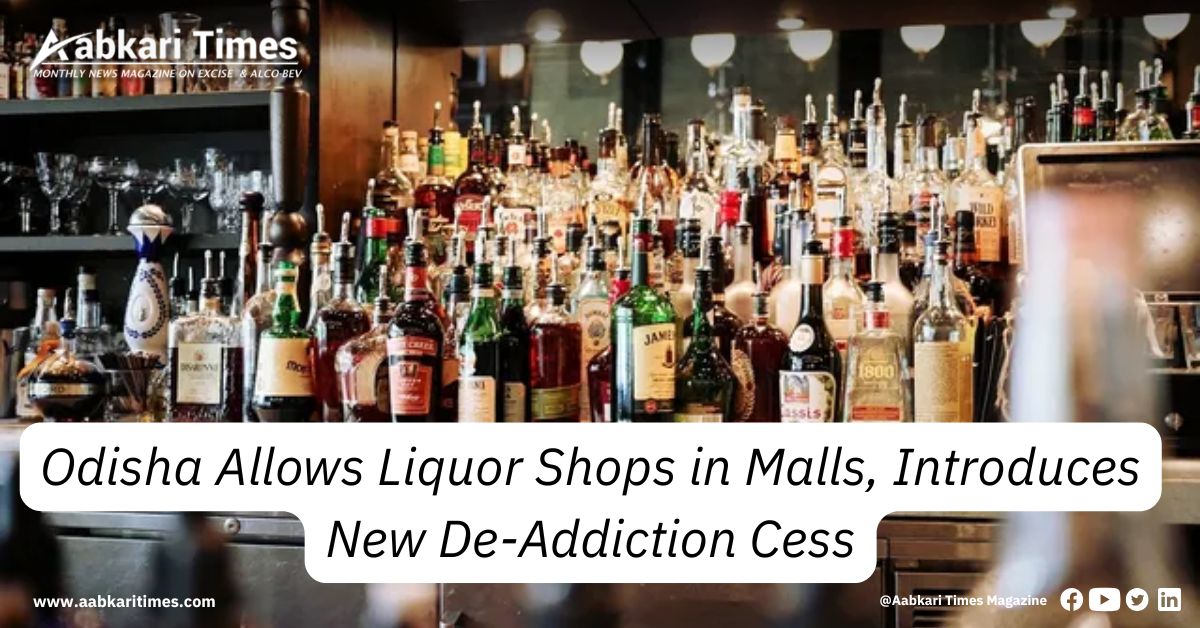
Buying liquor in Odisha is about to become a more premium experience. From April 1, people will be able to purchase alcohol from large, air-conditioned liquor stores inside shopping malls and key city locations.
Under the state’s new excise policy, these “super-premium” liquor outlets must be at least 4,000 sq. ft. in size and will be set up in major cities like Bhubaneswar, Cuttack, Puri, Rourkela, Sambalpur, and Berhampur.
Higher Prices for Consumers
While the shopping experience is getting an upgrade, liquor is also set to become more expensive. The government has introduced a new de-addiction cess and increased excise duty and import fees across categories.
- Prices of Indian-made foreign liquor (IMFL) may rise by 10% to 15%
- A 650 ml beer bottle could cost ₹5 to ₹12 more
- Imported premium whisky and rum may become ₹150 to ₹300 costlier per bottle
Licensing and Costs for Retailers
To open these premium outlets, applicants will have to pay:
- ₹5 lakh as a non-refundable application fee
- ₹50 lakh as annual licence fee (with a 10% yearly increase)
- ₹50,000 extra per year if they want to operate a wine-tasting room
Renewal charges will also increase gradually over time.
Restrictions in Puri
Keeping religious sentiments in mind, the government has banned liquor shops near the Jagannath Temple, on Badadanda, and in beach shacks within Puri city limits.
Focus on Monitoring and Safety
The new policy also introduces a track-and-trace system to monitor the movement of liquor from distilleries to retail shops. This aims to reduce illegal trade, prevent leakage, and ensure product quality.
Additionally:
- CCTV cameras will be mandatory across the entire supply chain
- All shops will offer digital payment options
- A 0.5% de-addiction cess will be charged on all liquor sales
The government has also created a ₹100 crore fund to support anti-alcohol and de-addiction programmes.
Key Policy Change
The state has removed the earlier rule requiring shops to lift a fixed quantity of liquor (MGQ). Instead, shops must now ensure a minimum guaranteed excise revenue (MGER) for the government, regardless of how much they sell.
What It Means
The new policy aims to modernise liquor retailing, improve transparency, and boost government revenue, while also promoting responsible drinking through de-addiction initiatives.