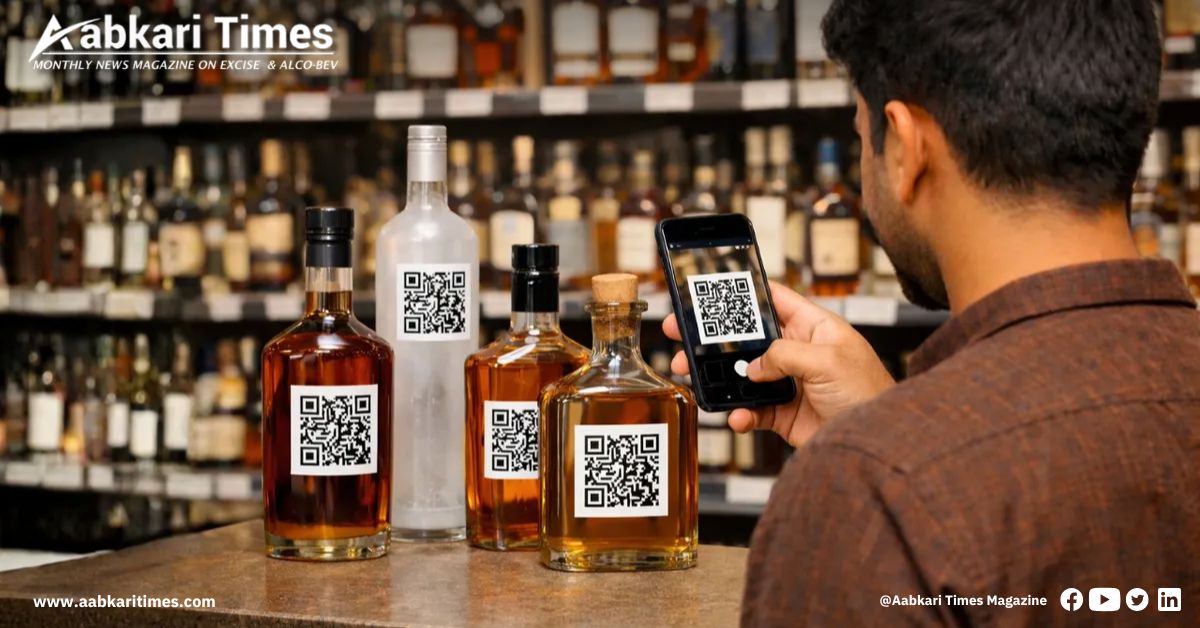
The Goa Excise Department has made it compulsory for all liquor bottles sold in the state to carry tamper-proof QR code labels. The move comes ahead of the rollout of the Deposit Refund Scheme (DRS), which is expected to begin in April.
Under the new rules, every bottle will have a high-security sticker with a QR code that allows authorities to digitally track and trace its origin. This system will help in monitoring sales as well as processing refunds when bottles are returned for recycling.
As per the official notification, the updated rules under the Goa Excise Duty Rules, 1964 apply to manufacturers of IMFL, beer, wine, and country liquor, along with bottling units and importers supplying liquor to Goa from within India or abroad.
Officials have clarified that no liquor bottle will be allowed to leave a manufacturing unit, warehouse, or licensed premises without the QR label attached.

How the Deposit Refund Scheme Will Work
Under the DRS, consumers will pay an additional ₹10 deposit when purchasing a bottle or can. This amount can be refunded when the empty container is returned at designated collection or recycling points.
Authorities have also set a deadline for all manufacturers and distributors to register under the scheme.
Centralised Label System
The excise commissioner will centrally procure these QR labels through an authorised agency and distribute them to manufacturers, bottlers, and importers. Companies will not be allowed any wastage allowance, and penalties will apply for any lost or damaged labels.
Importers have the flexibility to apply the labels either at the source before shipment or within Goa at their licensed facilities.
Phased Implementation Planned
The government may introduce the system in phases across different types of liquor, packaging sizes, and regions. In the long run, the QR-based tracking system could be fully integrated with the deposit refund mechanism, potentially eliminating the need for separate DRS labels.